

Pressure Review
Pressure explores the high-stakes weather forecasts and impossible decisions that shaped the D-Day invasion.
Brendan Fraser as Dwight D. Eisenhower in Pressure. Credit: Courtesy of Focus Features / StudioCanal
Director Anthony Maras’s Pressure, adapted from cowriter David Haig’s play, is a tense period drama based on a true WWII story I hadn’t seen on the big screen before. Stories that take place on the periphery of the battlefield, away from the violence itself, aren’t usually the first things that come to mind when we talk about war films. Nevertheless, these stories matter, and Pressure is a strong example despite some limitations. Excellent performances elevate both the film and its source material, even if the film occasionally pushes its drama too far out of the realm of subtlety, undercutting its power.
Andrew Scott plays Scottish meteorologist Captain James Stagg opposite Brendan Fraser’s General Dwight Eisenhower in the leadup to the D-Day invasion. 72 hours before the storming of Normandy, Stagg is tasked with delivering a weather forecast for the morning of the attack. Tensions rise when he clashes with arrogant American meteorologist Irving Krick as pressure mounts to make a final call on launching the invasion. Kerry Condon stars as Captain Kay Summersby, Eisenhower’s secretary.
The film is a compelling character piece about people operating under immense pressure, as its title cleverly suggests in both the emotional and atmospheric sense. Scott plays a man who repeatedly butts heads with his superiors yet refuses to bend. He trusts the science and continues thinking rationally rather than giving in to the wishes of people willing to ignore it for the sake of convenience or expediency, something we see far too often today.
(L to R) Andrew Scott as "Captain James Stagg" and Kerry Condon as "Captain Kay Summersby" in Pressure. Credit: Alex Bailey, courtesy of Focus Features / StudioCanal
Brendan Fraser’s portrayal of Eisenhower, carrying a different kind of burden, is another highlight. He’s tough and commanding in public, but behind closed doors he’s in anguish. Haunted by Exercise Tiger, the disastrous “dress rehearsal” for the invasion, he fears making another catastrophic mistake. Eisenhower had ordered live fire exercises to make the simulation more realistic, but timing failures led to the deaths of hundreds of American servicemen. The weight of that decision hangs over him throughout the film. It’s all for nothing if rough seas keep the Higgins boats from reaching shore or poor visibility prevents pilots from finding their targets.
Despite its origins as a stage play, Pressure avoids the staginess that can plague theatrical adaptations. The film’s greatest weakness is when it pushes conflict too hard, occasionally mistaking volume for intensity. Some confrontations lean on raised voices and dramatic clashes when the situation itself already provides more than enough tension. Tensions rise, but the fallout doesn’t need to feel so exaggerated to land.
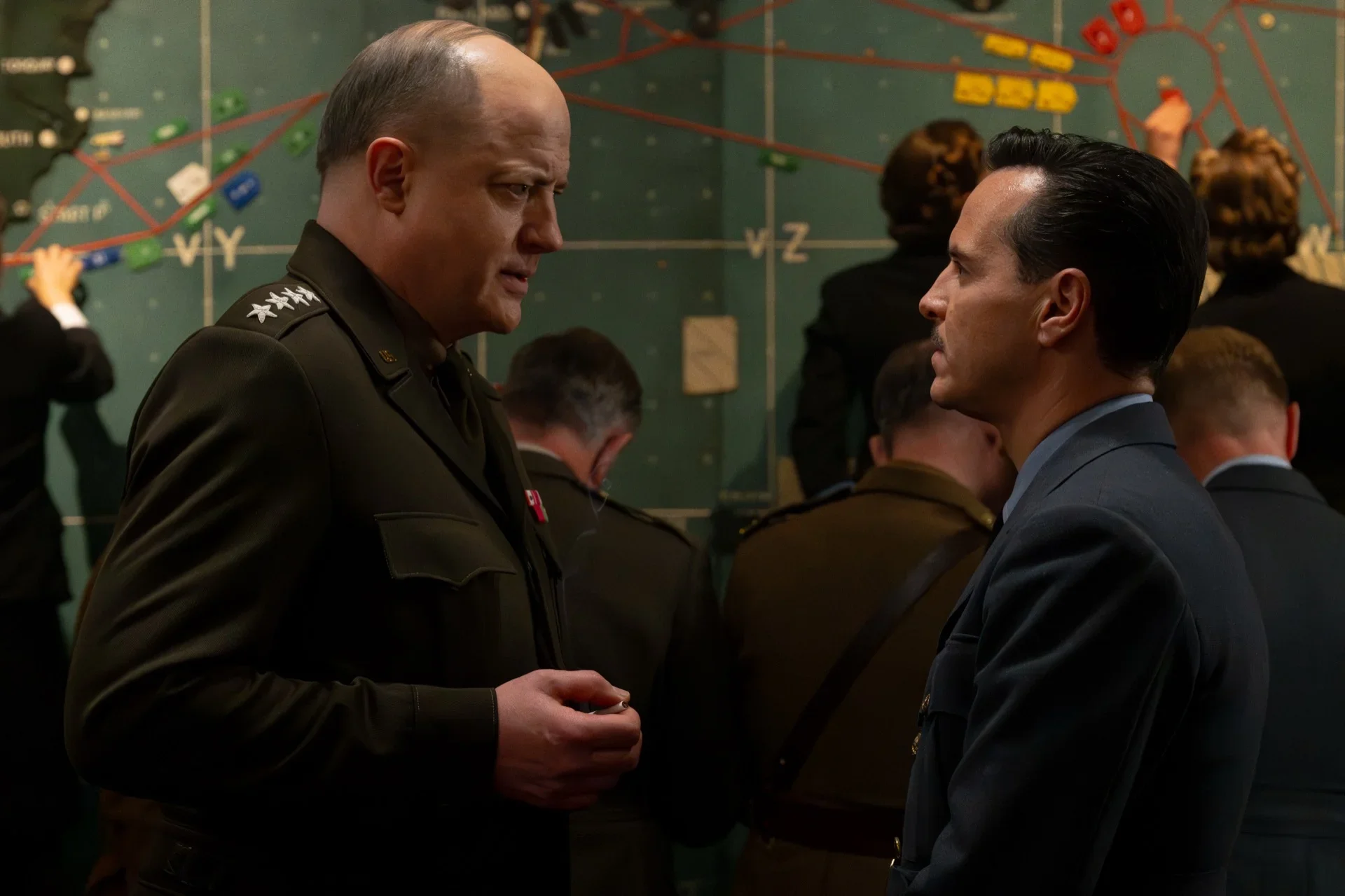
(L to R) Brendan Fraser as "Dwight D. Eisenhower" and Andrew Scott as "James Stagg" in Pressure. Credit: Alex Bailey, courtesy of Focus Features / StudioCanal
Maras and cinematographer Jamie D. Ramsay give the story a genuine sense of cinematic scale. Even knowing what decision will be made and how history unfolds, the film remains a gripping watch. Even when it leans too heavily on conventional dramatic conflict, Pressure remains a compelling look at the impossible decisions behind D-Day, elevated by strong performances from Scott and Fraser.
Pressure
Pressure succeeds when it trusts the weight of its situation, but its tendency to overplay conflict keeps it from reaching the heights its premise and cast deserve.






Resident Evil leaves its heroes behind as Zach Cregger follows a medical courier through a catastrophic night on the fringes of the Raccoon City incident.