Hearth and Hamlet Review
Guide a medieval settlement from camp to village in incremental builder Hearth and Hamlet.
Hearth and Hamlet. Credit: Phorust Studios / Runic Forge, Gamersky Games
Incremental games can eat hours of my time before I figure out whether I’m enjoying myself or just compulsively seeking the next slow-drip upgrade. Hearth and Hamlet caught me doing the latter. There’s useful direction in its quest-driven approach to growing a medieval settlement, though I realized far too late how little fun I was having.
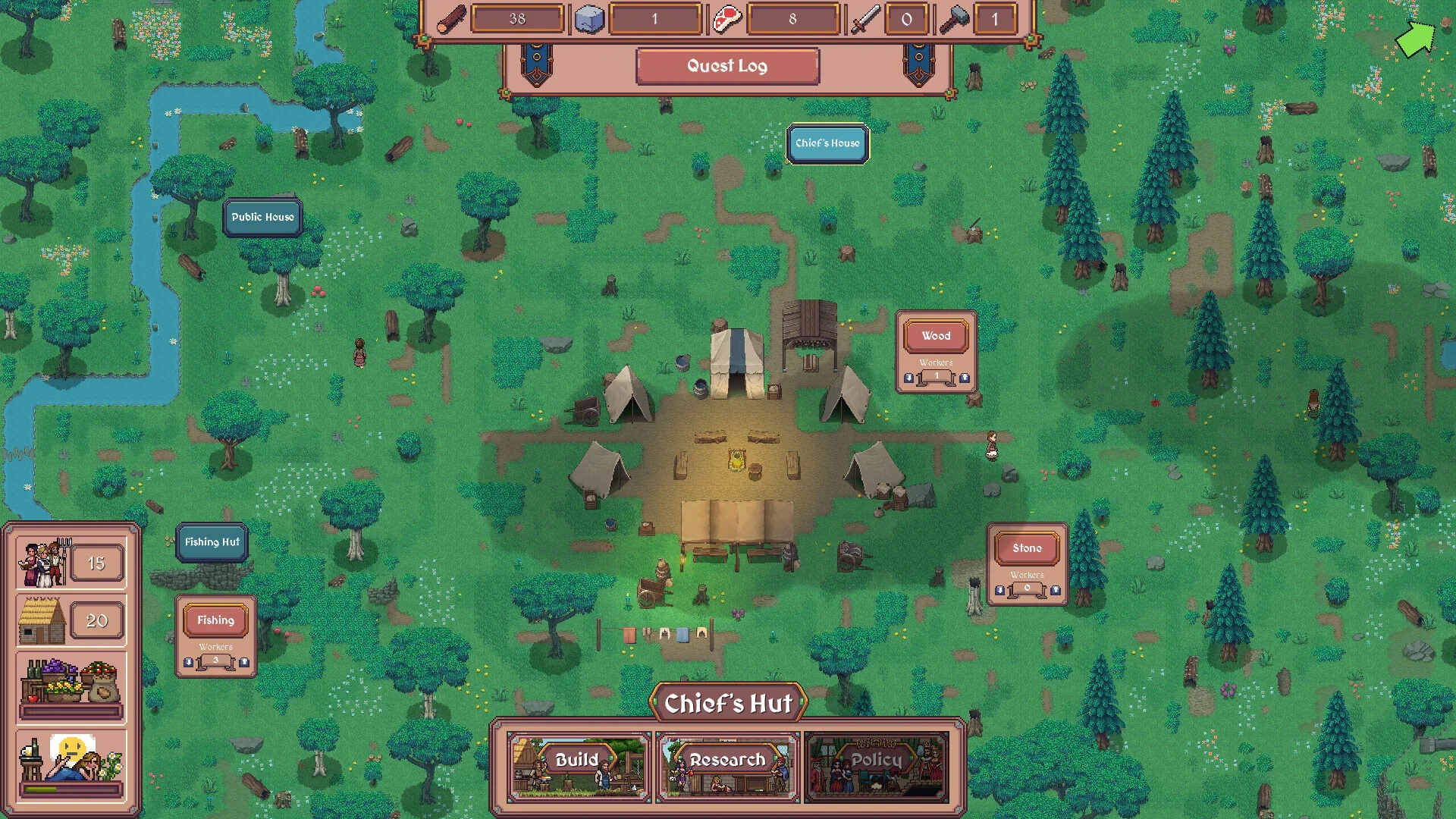
You turn a camp into a village by gradually constructing buildings and assigning your growing population to gather resources. New buildings offer upgrades and open further avenues for growth. Quests give that progression specific targets. Reaching a population milestone or gathering enough gold to pay off a neighboring kingdom unlocks further upgrades, keeping you from going too far down one research branch while neglecting everything else. Those goals guide your spending and give the village’s growth a logical order.
Interacting with resource generators like the mine or fishing hut, managing troops in the barracks, or browsing upgrades at the blacksmith means scrolling around the map to find the appropriate building. The clunky UI is the game’s greatest flaw, adding tedium that drained my enjoyment. Tiny resource controls at the top of the screen let you jump to mines and forests to assign workers. Why does the map need to scroll anywhere for something I should be able to adjust through a simple panel for all my resource gathering? There’s an upgrade book that saves you from finding individual buildings, so why not offer the same convenience for worker assignment? Even the book is awkward, with unintuitive menus to dig through. The game gives you multiple ways of doing the same thing without making any of them convenient. These kinds of conveniences should make the game feel streamlined, not clunkier.
Hearth and Hamlet. Credit: Phorust Studios / Runic Forge, Gamersky Games
Hearth and Hamlet. Credit: Phorust Studios / Runic Forge, Gamersky Games
Along with growing your town, you must defend it from marauders, which means conscripting soldiers and buying upgrades to your militia’s abilities. Attacks begin at random, with a countdown to battle as the enemy crawls down the minimap toward your town. Combat then resolves automatically. Training enough defenders felt like an obligation rather than an interesting part of running the settlement. The trade system, where you send merchants abroad to exchange resources, felt similarly tacked on, another distraction that adds busywork rather than depth. Trading never felt like it made a material difference from just gathering the resources myself.
None of this is helped by how much of an eyesore the game is. Chunky pixel art clashes with smoother, higher-resolution line art, all tied together by an unattractive color palette. The art doesn’t need to be flashy, but it also didn’t need to be this ugly.
The quests give Hearth and Hamlet enough structure to make its gradual expansion approachable. The awkward interface made the experience of managing it grating, with new unlocks starting to feel like more tedium on the pile rather than rewards. I wish I hadn’t invested as much time in this one as I did.
Hearth and Hamlet
Useful quest guidance can’t save Hearth and Hamlet from awkward town management that makes new unlocks feel like more tedium on the pile.





Rearrange a world of hand-drawn sticky notes to help Froggo get home in this heartwarming narrative puzzle adventure.