White Sky #1 [Review]
Writer: William Harms
Artist: JP Mavinga
Colorist: Lee Loughridge
Letterer: Ed Dukeshire
Publisher: Image Comics
February is turning into a serious flex for Image Comics. First came D’orc, a sharp, offbeat fantasy about a half-dwarf, half-orc bruiser and his talking shield that somehow balanced humor and brutality without collapsing under its own tone. Now White Sky arrives, swapping whimsy for ash and leaning into the kind of grounded, emotionally driven apocalypse that fans of The Last of Us and The Walking Dead instinctively gravitate toward.
Post-apocalyptic fiction works when the spectacle is secondary to the people. The world can crumble, but the human connection has to hold. White Sky gets that immediately.
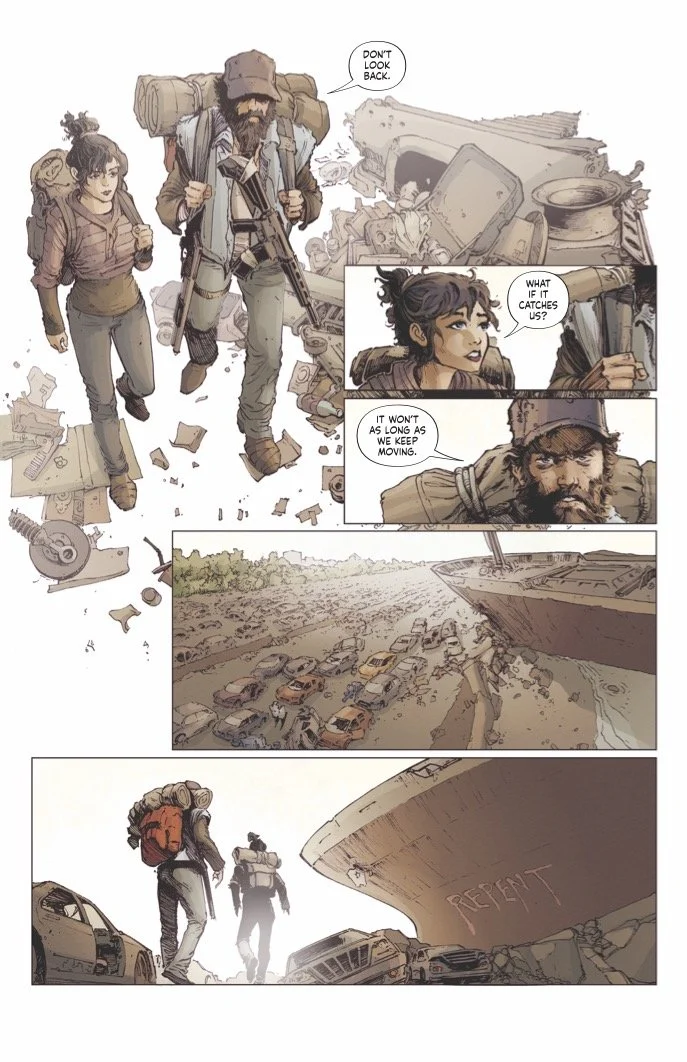
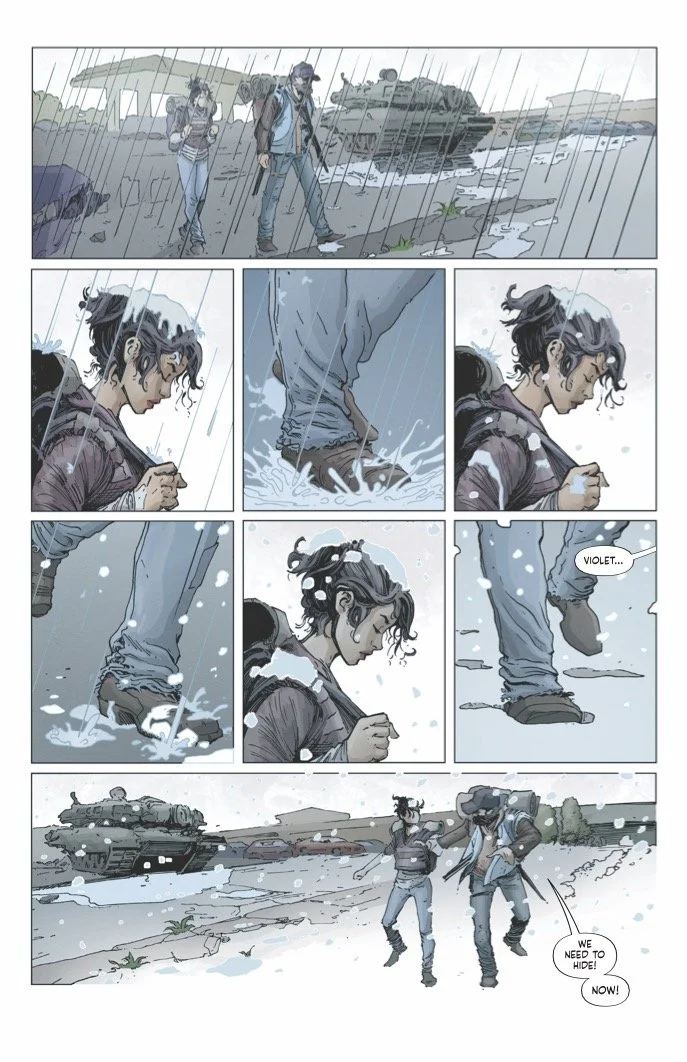
The setup is sparse: civilization has fallen; somewhere in the distance, a massive fire continues to burn - a lingering catastrophe that reshaped the planet. In the foreground, a father and his daughter, Violet, navigate the wreckage. They count bullets. They scavenge food. They keep moving. The threat is present but often unseen, which makes for a heavy environment.
Harms resists exposition. There is no clean explanation of what caused the end. Instead, we get emotional fragments: Violet struggling to remember her mother’s voice. A locket with a fading photograph. A father trying to be both protector and anchor in a world stripped of stability. The apocalypse already happened - that event has passed, and Harms treats us to the real heartbreak of the emotional erosion that follows.
That restraint makes sense given William Harms’ background. Harms has been writing professionally since the mid-1990s, working across comics and video games for major companies including Sony Entertainment, 2K, Ubisoft, Marvel, DC, Image, and Top Cow. He served as Narrative Director on Mafia III, a critically acclaimed title that earned BAFTA nominations and industry recognition for its character-driven storytelling. In comics, he has written series such as Impaler, an International Horror Guild Award finalist, and 39 Minutes, while also contributing to properties featuring Captain America, The Avengers, and Wolverine. Currently Studio Narrative Director at Lightspeed LA, Harms brings a cinematic sensibility and disciplined pacing to White Sky. His experience crafting long-form narrative arcs in interactive media shows here. The emotional beats land because they are structured with intention, not melodrama.
Visually, JP Mavinga and Lee Loughridge deliver a quiet kind of devastation. The panels lean into muted earth tones, dusty blues, and washed-out oranges that make the world feel sun-bleached and brittle. Close-ups of Violet’s tear-filled eyes contrast with wide shots of collapsed highways and endless lines of abandoned cars. The scale of ruin feels believable, not exaggerated. There’s no need to oversell the end of the world.
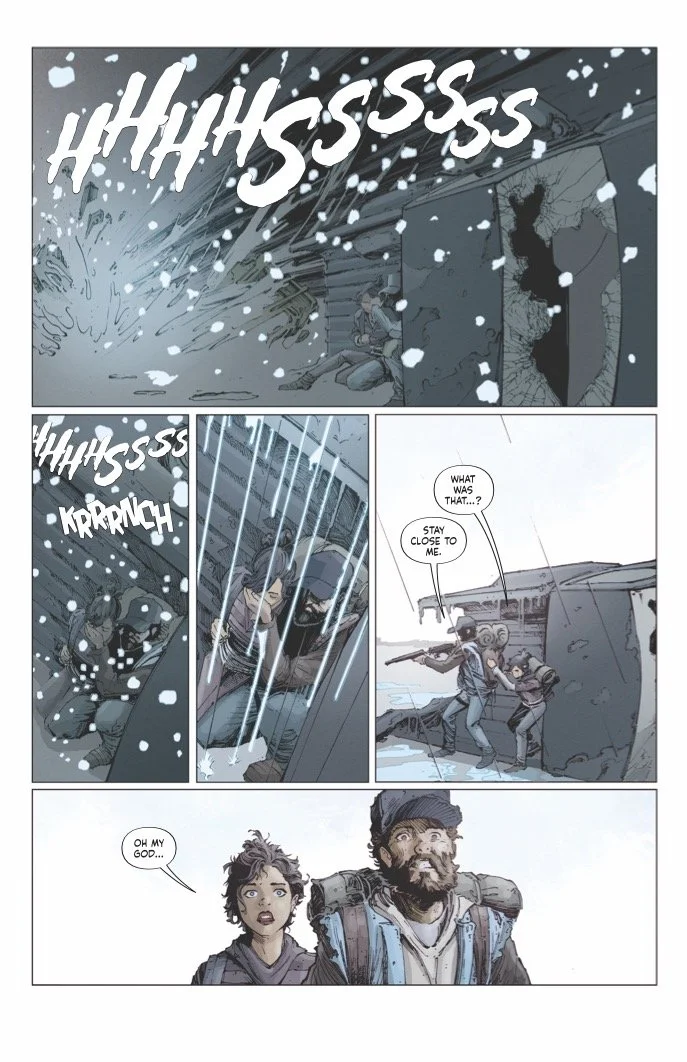
Mavinga’s linework favors expressive faces and clean panel flow, allowing emotional beats to breathe. There is a cinematic pacing to the layouts, especially in sequences that shift from intimate interior scenes to expansive wastelands. Loughridge’s colors soften the edges just enough to create melancholy rather than shock. Ed Dukeshire’s lettering remains understated, giving the dialogue space without crowding the art.
As Violet and her dad are traversing an abandoned highway, he tells her: “Don’t look back.” Sure, it’s advice for Violet, but it also reflects how White Sky approaches the genre. It does not try to reinvent the apocalypse. It refines it. The issue leaves plenty unanswered, particularly about the fire and the broader state of the world, but the emotional hook is secure.
Overall, Image looks poised to add another strong title to its 2026 lineup. If this first issue is any indication, White Sky has the potential to stand alongside the heavy hitters of the genre.
![Mega Man Gear Masters #1 [Review]](https://images.squarespace-cdn.com/content/v1/6371c1aaf44e9e0252208a01/1790720658721-0SIXV35HA9V866KTC2II/images-6.jpeg)
![Absolute Batman #23 [Review]](https://images.squarespace-cdn.com/content/v1/6371c1aaf44e9e0252208a01/1788059960466-TKU06BHRIVCY88N6T8VT/ab23-2.jpeg)
![Dr. Wily #1 [Review]](https://images.squarespace-cdn.com/content/v1/6371c1aaf44e9e0252208a01/1786318040777-NTT10IEPHZVNLOLEL9I2/IMG_4570.png)
![A Mischief of Magpies - Issue 1 [Review]](https://images.squarespace-cdn.com/content/v1/6371c1aaf44e9e0252208a01/1784429911584-RDZUCYUY944WOGLZ7J3B/images-5.jpeg)

Have no fear MBP is here! Modern gaming manuals at their best!