Pokémon Pokopia [Review]
I need to make a confession. Despite being steeped in video game culture pretty much from the moment I could wrap my hands around a controller, one major IP that I never caught the boat on was Pokémon.
I know. I know…just hear me out!
When Pokémon Red and Blue were tearing through schoolyards in the late '90s, and friends were raving about their adventures training and capturing these adorable (and dangerous) creatures, I was somewhere else entirely. I was a PlayStation kid. Final Fantasy VII had just rewired my brain for what storytelling in games could look like. Metal Gear Solid was raising the bar for cinematic ambition in ways I didn't think the medium was capable of. In that context, Pokémon felt like a kids' game, something meant for someone a few years younger than me. And maybe that's exactly what it was. Maybe I was just old enough for the phenomenon to pass through me without sticking. I was the wrong age at the wrong time.
That said, don't get me wrong. I was absolutely hooked on the animated series. Growing up with five younger sisters meant the TV was permanently tuned to Ash Ketchum's adventures, and we all became genuinely invested in his journey through the Indigo League and beyond. But that was the extent of my relationship with Pokémon. I knew the anime. I knew the cultural footprint. I just never played the games. And as the franchise expanded across platforms and generations, adding hundreds of new creatures and region after region, the gap between me and the series only widened. I always felt like I was too far removed to jump in.
And then I heard about Pokémon Pokopia.
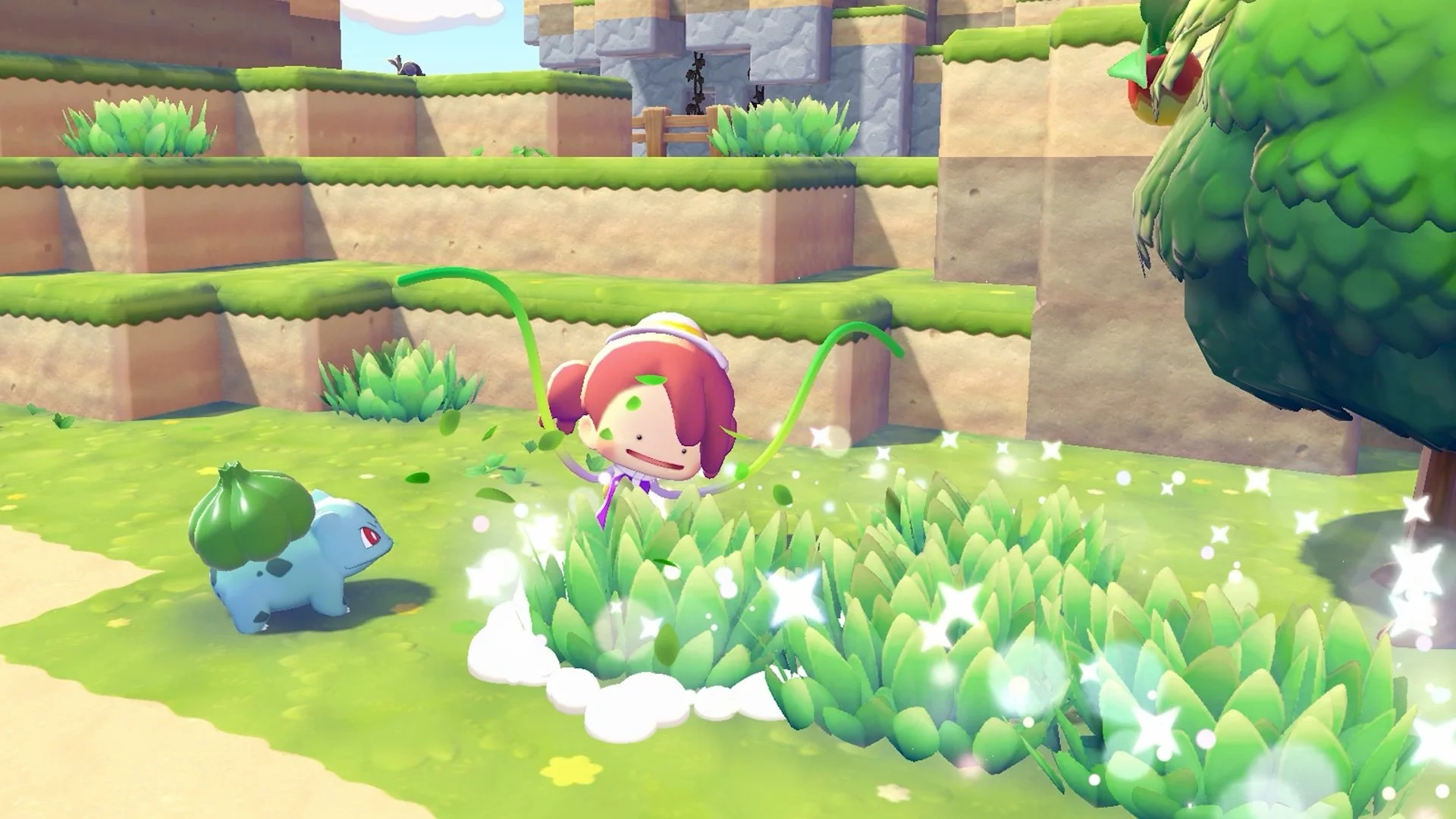
The pitch alone caught my attention: an Animal Crossing-style life sim set in the Pokémon universe, developed by Omega Force with members of the Dragon Quest Builders 2 team. That combination of cozy sandbox gameplay and a beloved IP felt like it might be the bridge I'd been waiting for (without knowing I was waiting). After hearing Greg Miller of Kinda Funny Games fame rave about it, and then seeing it in person at the Nintendo Store in San Francisco during a recent visit, I ended up walking out with a copy in hand. I settled in to see what all the fuss was about, and within a few hours, I understood completely.
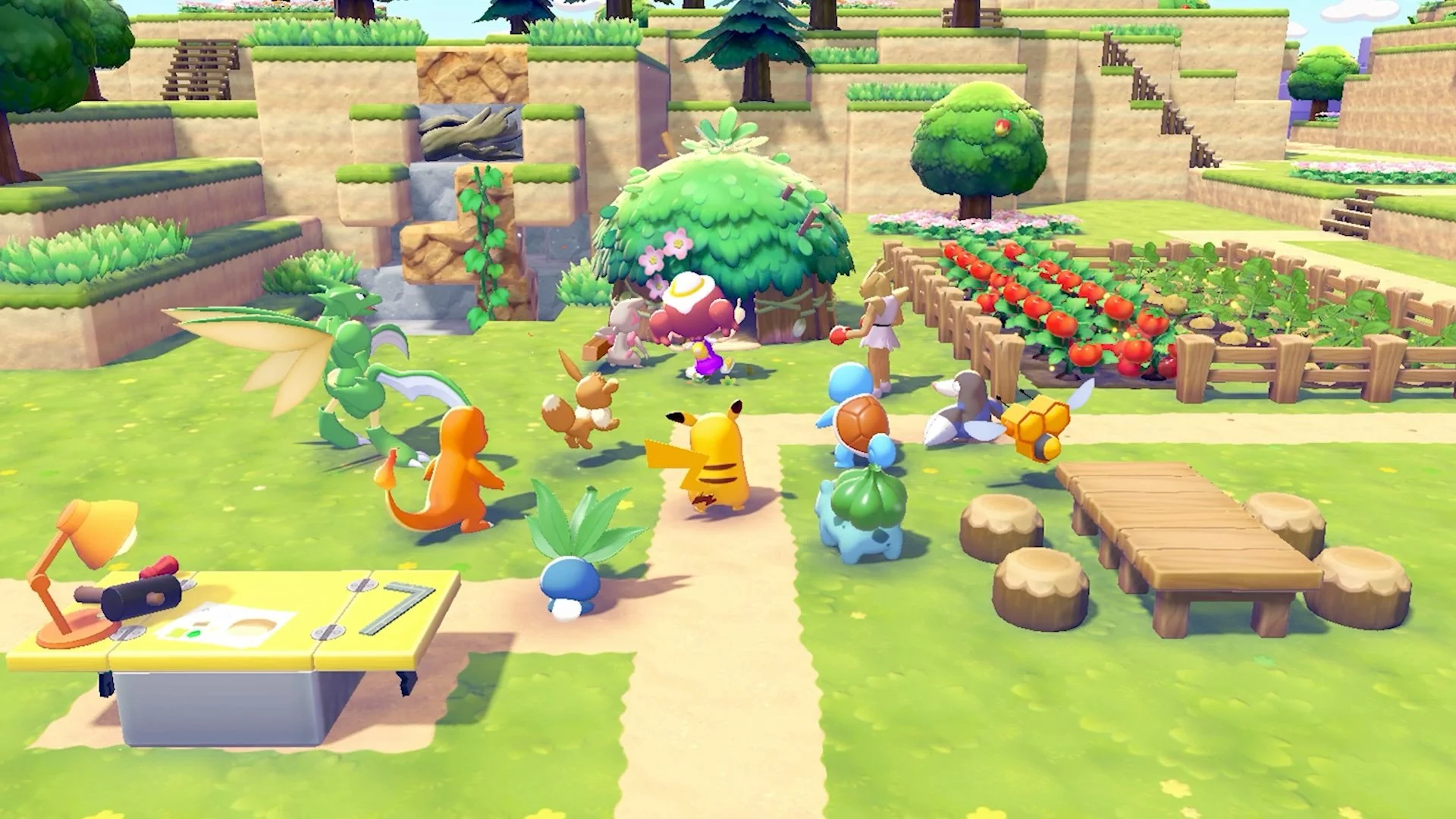
In Pokopia, you take the role of Ditto, the shape-shifting Pokémon known for mimicking the appearance and abilities of others. Ditto awakens in a barren, post-human version of the Kanto region with no memory of what happened and no sign of its former trainer. Using its unique transformation abilities, Ditto sets out to restore a series of abandoned biomes, making them inviting places for Pokémon to return and live. By enhancing the environment, providing furniture and toys, and accomplishing tasks for the Pokémon that show up, you steadily improve the comfort and happiness of your growing community, all in the hopes of unraveling two intertwined mysteries: where have the missing Pokémon gone, and more importantly, where have all the humans disappeared to?
Ditto might seem like an unconventional choice for a protagonist, but the decision is genuinely inspired, and multiple outlets have also flagged this as one of the game's smartest moves. IGN's Rebekah Valentine praised how the game leans into Ditto's blobby, gooey nature, noting how it sprouts vine arms for Leafage and grows a shell and Squirtle tail for Water Gun, making every transformation feel playful and tactile. GameSpot's Steve Watts highlighted the narrative weight behind the choice: Ditto takes the rough shape of its missing trainer, essentially becoming a walking monument to the bond between Pokémon and human. Kotaku's review called Ditto the "Pocket Monster equivalent of a Swiss Army Knife," and it's an apt comparison. The transformation mechanic gives the entire gameplay loop a diegetic logic that feels distinctly Pokémon, even to someone like me who's mostly been on the outside looking in. Don’t be fooled: the emotional dimension can definitely sneak up on you. When Ditto curls up to sleep at night, it reverts to its natural pink blob form, a small but affecting reminder that this little creature is doing everything it can to hold onto someone who isn't there anymore.
The gameplay itself is straightforward in the best possible way. You manipulate the environment using abilities borrowed from other Pokémon: Squirtle's Water Gun to irrigate dead land, Bulbasaur's Leafage to sprout patches of grass, Scyther's Cut to clear debris and harvest lumber. As you restore the desolate biome you start in, you learn to create habitats for Pokémon, whether that's a patch of tall grass, a tree-shaded clearing, or a lily pad pond. Different biomes present different opportunities, and each habitat attracts a slightly different roster of Pokémon based on the conditions you've built. After some time, the grass and bushes will begin to rustle, signaling that a new Pokémon has arrived. Each one has its own preferences, its own personality quirks, and its own needs for what makes it comfortable. Your job is to continuously curate and manage these environments, fostering a veritable Pokémon utopia one habitat at a time.
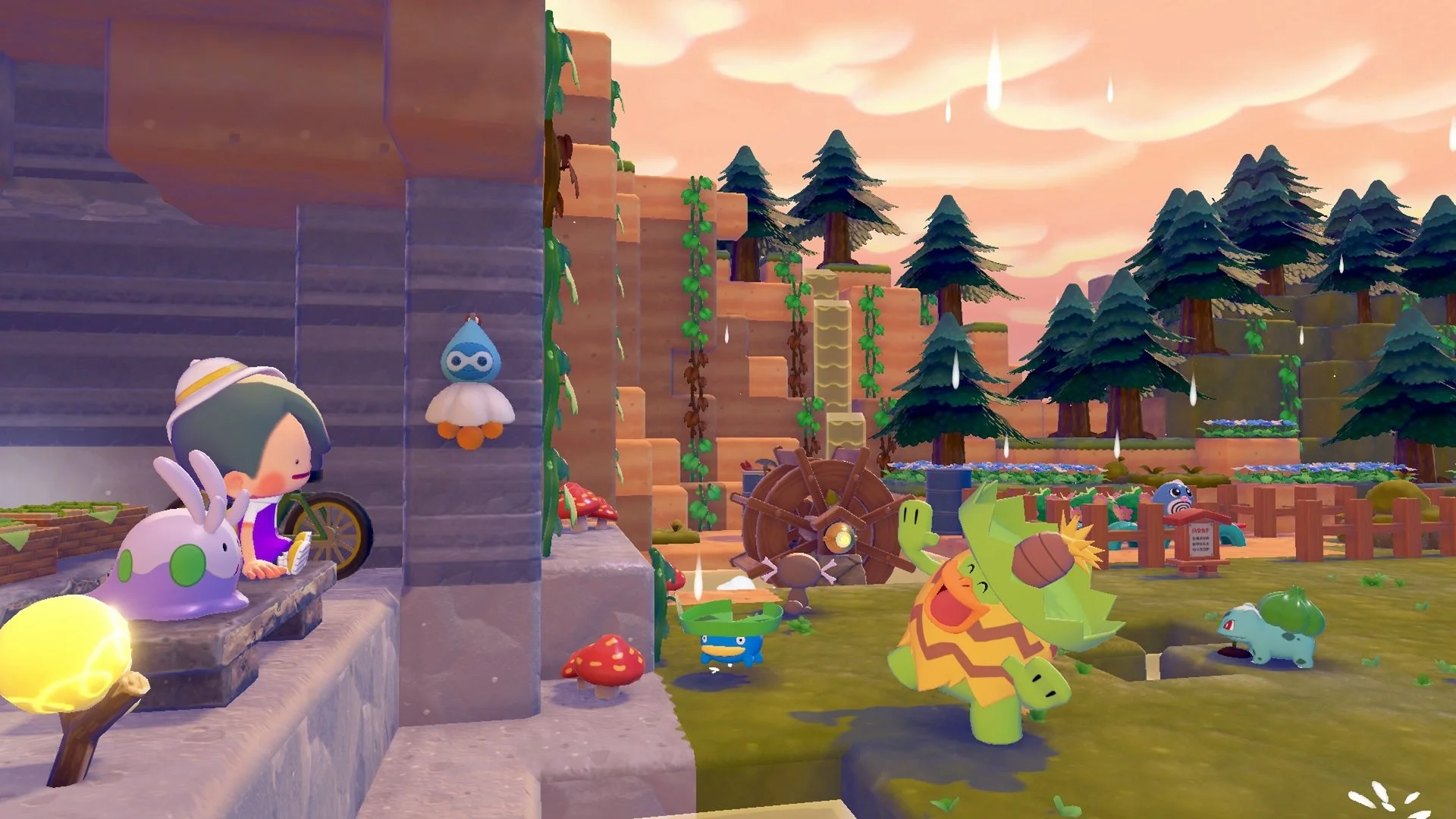
Critics across the board have been enthusiastic about this loop. Game Informer called it one of the best laid-back simulation titles in years, praising how it strips conflict from the Pokémon formula and replaces it with revitalization. GamesRadar highlighted how playing as Ditto marries perfectly with the story and the mystery behind it. Polygon, in their unscored review, offered a more tempered take, noting that the game can sometimes feel mechanical and that Pokémon occasionally function more like tools than living creatures. TheGamer echoed a similar concern, finding some of the building quests rigid and repetitive. These are fair critiques. There are moments where the resource gathering and block-by-block construction can feel like busywork, and the inventory management across multiple biomes could use some refinement. GameSpot noted that you're essentially rebuilding Pokémon Centers in each new area, and the structure can feel formulaic if you're sensitive to repetition.
But here's the thing: the story keeps pulling you forward, and it's surprisingly heartfelt. Ditto's love for their former trainer is a powerful motivator that quietly drives everything you do. The world is littered with diary entries, newspaper clippings, and letters that slowly piece together what happened to humanity, and each discovery is more affecting than the last. Kotaku's full review described the underlying emotional foundations as being about love, loss, and longing, all presented in a way that's accessible to younger players while resonating deeply with older ones. The game currently holds an 88 on Metacritic, making it the highest-rated Pokémon game on the platform, and it has already moved over 2.2 million copies in its first four days. That's not a fluke. This game has clearly struck a nerve.
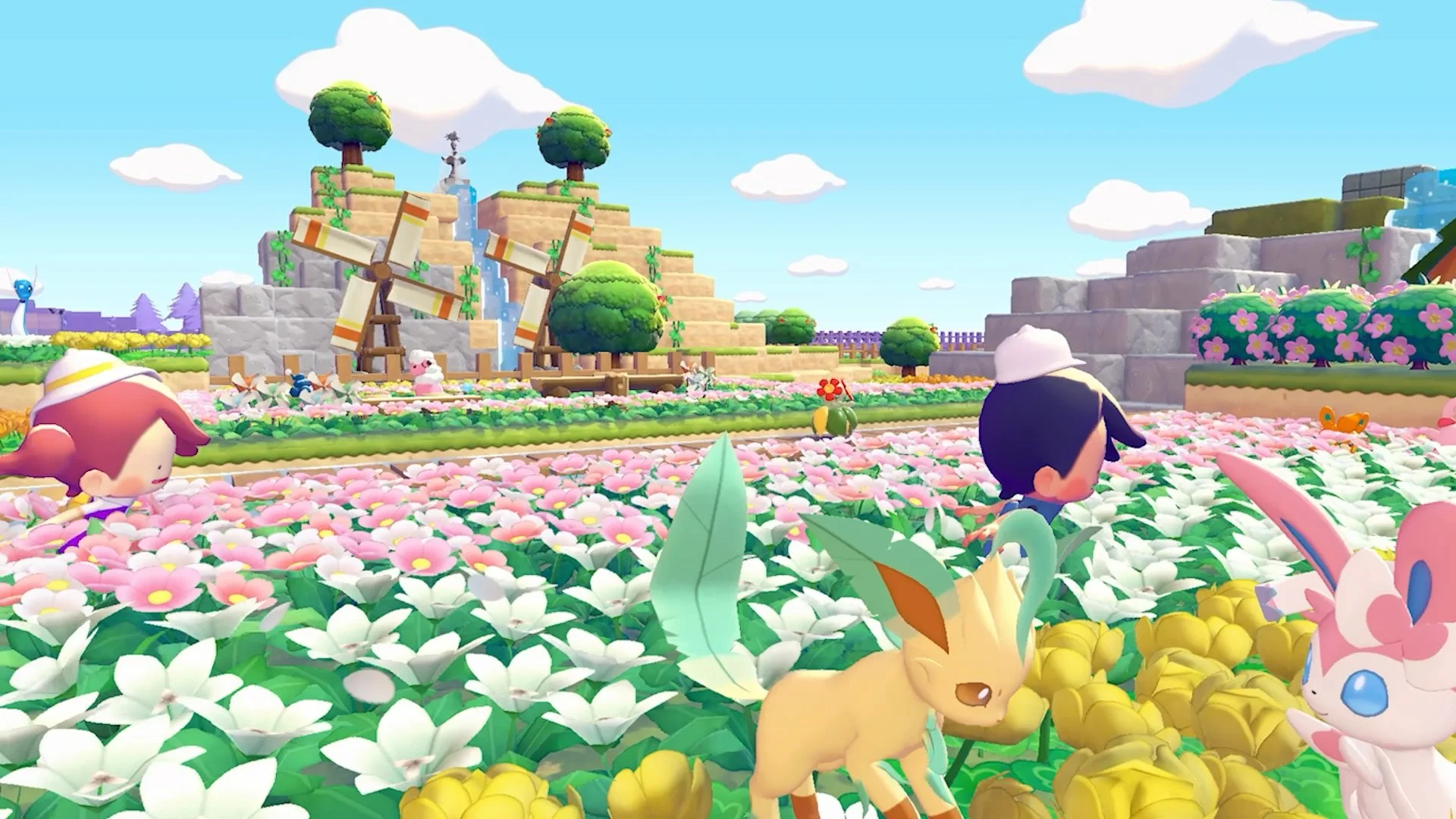
Overall, Pokopia is a fantastic video game, but more importantly, it's a remarkably accessible one, even for gamers who have spent the better part of three decades outside the Pokémon bubble. I came in knowing next to nothing about the franchise beyond what Saturday morning cartoons taught me, and I never once felt like the game was gatekeeping me out of the experience. If anything, it made me wish I had jumped in sooner. With all the stress and noise in the world right now, Pokopia provides something increasingly rare: a low-pressure, genuinely fun outlet that rewards kindness, creativity, and curiosity. It's a game about rebuilding a broken world by caring about the creatures in it, and that idea resonates well beyond the boundaries of any single franchise.
Whether you're a lifelong Pokémon fan or a stubborn holdout like me, Pokopia is well worth your time.