Sixteen years in the making, Laika’s stop-motion epic is a handcrafted marvel worth every frame
It’s been seven long years since Laika last had a film in theaters. Missing Link came and went in 2019 without finding the audience it deserved, and if you’re anything like me, you’ve spent a good chunk of the time since wondering whether the little Oregon studio behind Coraline and Kubo and the Two Strings would get another swing at the big screen. Well, it got one, and they’ve made it count.
Wildwood started life as a 2011 middle-grade novel by Colin Meloy, frontman of The Decemberists, illustrated by his wife Carson Ellis. The book reimagines Portland’s Forest Park as an enchanted wilderness of coyote soldiers, bandits and talking owls. Travis Knight got an early look at the manuscript right after Coraline, and Laika optioned it within weeks of publication, but Knight has said the studio simply wasn’t ready to make something this big. Sixteen years later, Knight directs his first stop-motion feature since Kubo, with Chris Butler of ParaNorman on script and veteran cinematographer Caleb Deschanel making his first trip into stop-motion. The result is Laika’s first PG-13 film and, at a little over two hours, the longest stop-motion feature ever made.
Prue McKeel (Peyton Elizabeth Lee) is a twelve-year-old with more attitude than her hippie parents (Jake Johnson and Maya Erskine) know what to do with. They ask her to watch her baby brother Mac with one odd rule attached: he doesn’t go outside. Prue takes him out anyway, bumps into her awkward classmate Curtis (Jacob Tremblay), and watches helplessly as a murder of crows carries Mac across the Willamette and into the Impassable Wilderness. The two bike after him and stumble into Wildwood, a land where humans and animals live side by side, where the Dowager Governess Alexandra (Carey Mulligan) commands an army of coyotes, and where the whole place is sliding toward war.
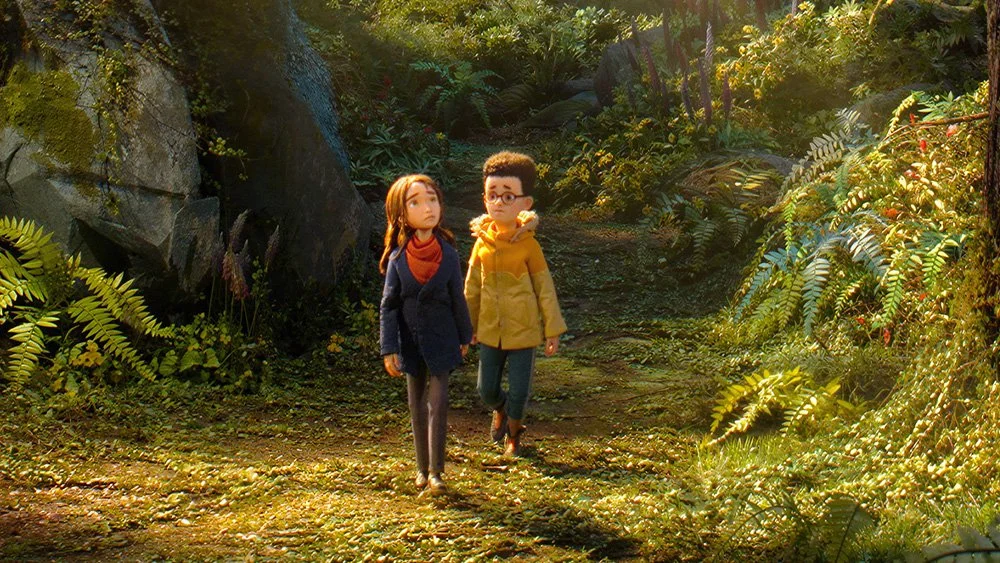
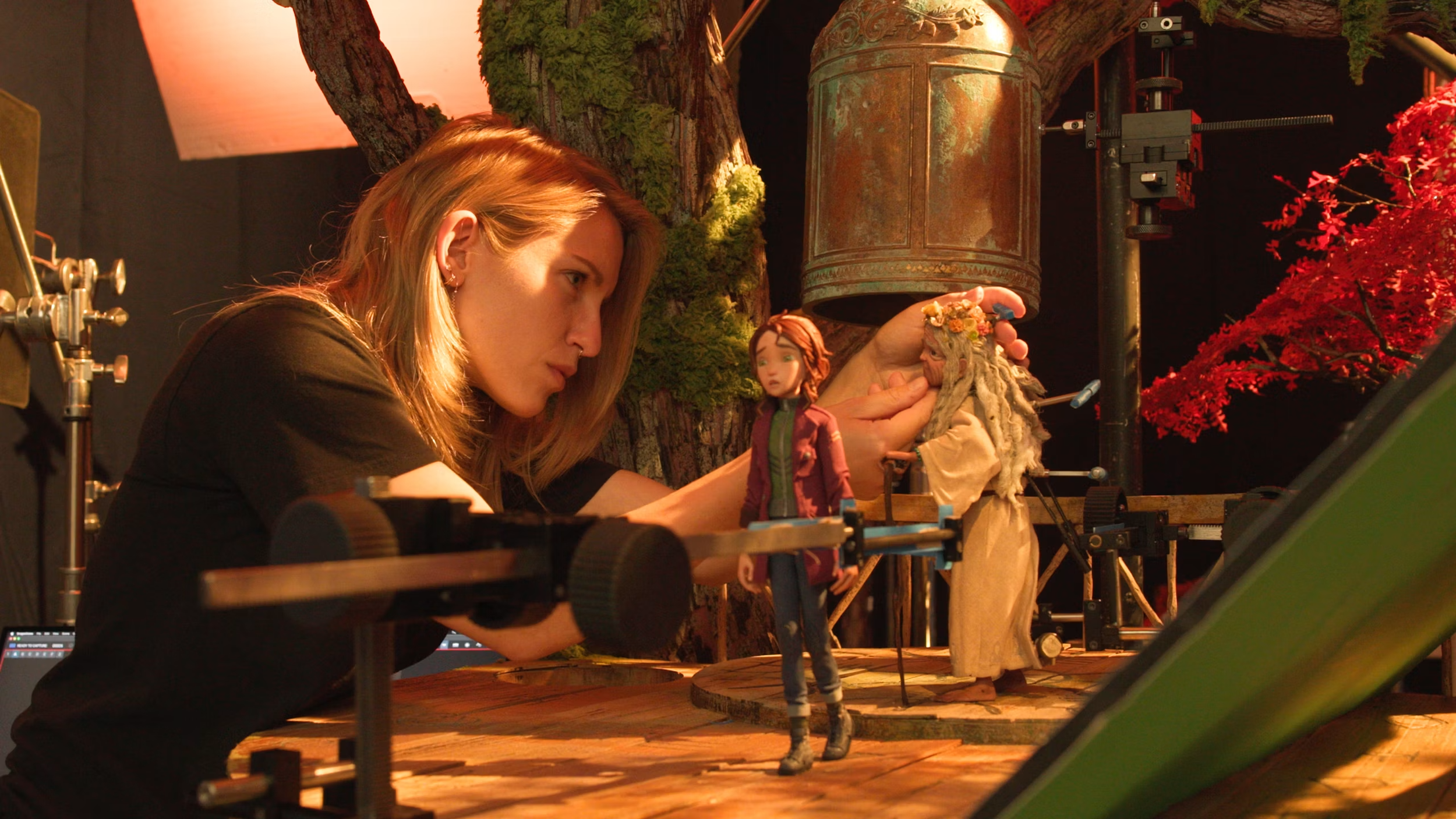
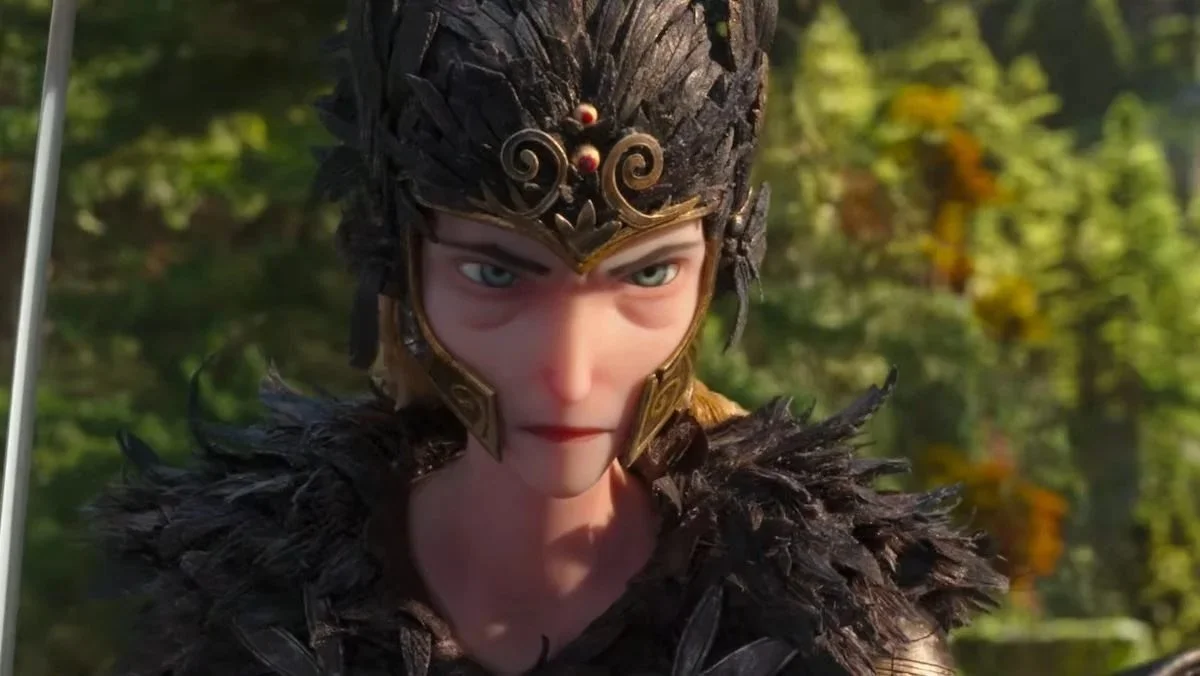
The craft here hits you in the first minute and never lets up. Laika built 136 sets and 231 practical puppets for this film, and a miniature version of the Pittock Mansion alone took dozens of artists more than eleven weeks. One shot required over a thousand facial replacements, a stop-motion record. You feel all of that labor on screen in the coyote legions marching in formation, in the stitching on a bandit’s coat, and in a forest where what seems like every single leaf trembles in the wind. Deschanel shoots it like a live-action epic, and the Portland cameos, from the St. Johns Bridge to Voodoo Doughnut, give the fantasy a lived-in, hometown warmth.
Some critics have pointed out that a good share of the film’s roughly 2,800 shots carry digital work. That’s true, and it’s been true of Laika since Kubo earned a rare Visual Effects nomination. Look at what the CGI is doing, though: it extends sets past what a physical stage can hold, paints out the rigs holding puppets aloft, and handles the things you can’t build out of wire and silicone, like a believable cannon blast. Laika even scans its handmade objects to build the digital environments, and the creeping ivy was designed physically and tested with wire and cotton before it went digital. VFX supervisor Steve Emerson has described the goal as making the technology serve the stop-motion performances, and I think that’s exactly how it plays.
The broad strokes of the plot may sound familiar, a stolen sibling and an enchanted forest, but Wildwood is bold about where it puts its kids. Prue and Curtis are thrust into real danger and emotionally brutal situations that most family adventures would steer around. Both make real mistakes and carry the weight of them home, which gives the film far more nuance than the typical childhood adventure.
The voice work makes all of it land. Mulligan plays Alexandra as terrifying and heartbreaking at once, Tom Waits growls through a fascist coyote lieutenant, and Awkwafina and Mahershala Ali round out a stacked supporting cast. Charlie Day steals scenes as Dmitri, a cowardly coyote, which is where much of the film’s sharp humor lives alongside some affectionate ribbing of Portland’s hipster streak. Dario Marianelli’s sweeping score carries the epic moments, and The Decemberists close things out with an original song, “The Better Part of Bravery.”
Some outlets have flagged the film as too dark and violent for young kids, and I understand the concern. I’d also argue children’s stories have grown steadily more sanitized over the last twenty-five years. My generation grew up with stories like The Land Before Time, and Littlefoot’s mother’s death and her final words to him hit an entire generation of kids right in the heart, and in its own way, invited all of us to wrestle with mortality in our own way. Wildwood offers something rarer still, the chance for kids to watch an adult wrestle with grief, a particular kind of grief, and that isn’t something to shield them from for comfort’s sake. It’s every parent’s call, of course, but Wildwood deserves to be seen by everyone, families included.
At a moment when so much of our culture is being flooded with machine-generated sludge, a handmade film like this one deserves our awe (and our ticket money). Wildwood is a 10/10, and whether you’re a longtime Laika devotee or just curious, get yourself to a theater as soon as you can.
Wildwood
Breathtaking craft and a fearless story make Wildwood the must-see animated film of the year.