When the Hype Becomes the Product: Why GTA VI Might Not Be Able to Win
With an older audience, a fractured attention economy, a generation that would rather watch than play, and a budget north of a billion dollars, the hype may be the hardest thing GTA VI has to beat.
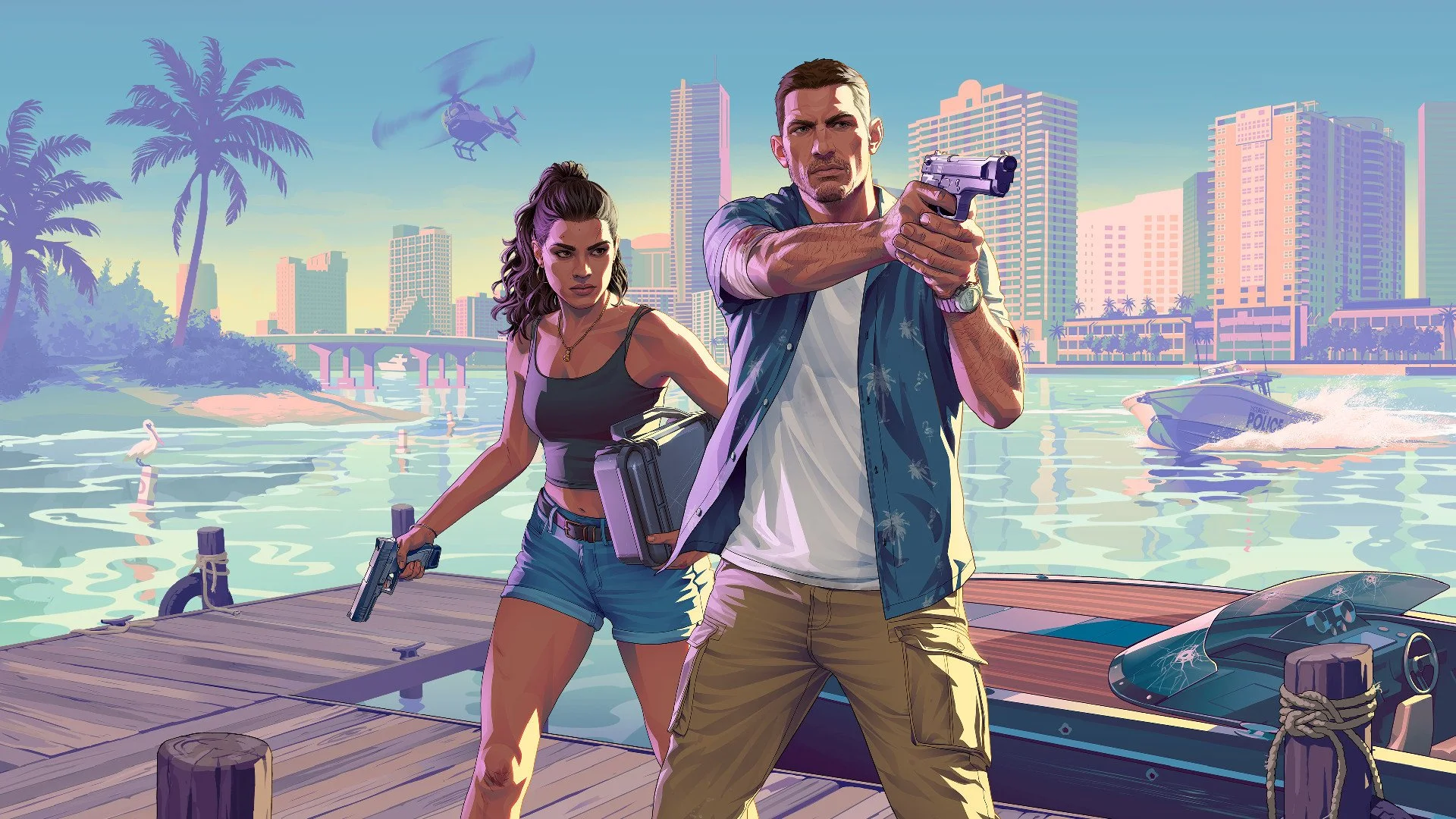
Imagine a world where on November 19, 2026, Grand Theft Auto VI sells more copies, faster, than any piece of entertainment ever made…and is still treated as a disappointment. That is the strange box Rockstar has built for itself. Take-Two has spent the better part of three years telling shareholders that GTA VI is "arguably, the most anticipated entertainment property of all time." When that is the bar you set, "massive commercial success" is no longer a win. It is the baseline. Anything short of reshaping the culture reads as a stumble.
I want to be clear up front, because GTA discourse can turn into virtual fisticuffs the second you express anything other than total faith: this game is going to sell a mountain of copies. That is not in question. What I am questioning is whether it can clear the specific, almost mythological expectation that has been piled on top of it, and whether the ground underneath that expectation has shifted more than the hype machine wants to admit.
Thirteen years is a long time to hold your breath
GTA V launched in September 2013. To put that in perspective for those of us who measure time in console generations, that game came out on the PlayStation 3. We have had the PS4, the PS4 Pro, the PS5, and the PS5 Pro since. GTA VI, now dated for November 19 after two delays (it slid from a Fall 2025 window, to May 2026, to this fall), will arrive roughly thirteen years after its predecessor. Preorders open June 25, which is also when we finally learn the price.
Thirteen years is not a sequel cycle. It is a full-on generational gap. The kid who lost a summer to San Andreas, or who first rolled into Los Santos in 2013, has aged out of the demographic entirely. Rockstar is not releasing a game into the same world that made GTA V the cultural juggernaut it became. They are releasing it into a fundamentally different one, and pretending otherwise is how you set yourself up to be surprised.
The audience that made GTA V is not the audience waiting for VI
The average gamer is now 36 years old, a figure that has crept up every year as my generation simply refused to put the controller down (you can pry it from my cold, dead hands!). That sounds like good news for a franchise that has been around since the PS2 era, and in some ways it is. But it cuts the other way too.
A 36-year-old with a job and kids does not have the runway that a 16-year-old does. The defining GTA experience, the thing that built the brand, was the open-ended weekend you disappeared into. That player still exists, but they are increasingly outnumbered. The center of gravity in gaming has moved to mobile, which pulled in roughly $103 billion in 2025, about 55 percent of the entire industry. The median mobile session runs five or six minutes. That is the rhythm a huge share of the modern audience plays in now, and a sprawling epic that asks for a minimum of 40-60 hours (with some rumors pushing upwards of 80-100) is swimming against that current, not riding it.
Competing with “The Feed”
When GTA V came out, the thing competing for your evening was another game, or a movie, or the people on the couch next to you. That is not the landscape anymore. TikTok arrived in 2016, and has reshaped how folks engage with content. The average TikTok user now spends around 95 minutes a day on the app, and for Gen Z that climbs past two and a half hours. That time had to come from somewhere, and a meaningful chunk of it came out of the exact unstructured leisure hours that open-world games used to own.
This matters more than I think people appreciate. Rockstar is not just asking you to buy a game. They are asking you to break a habit that the most sophisticated attention-capture machines ever built have spent a over a decade reinforcing. The endless scroll is engineered to give you a little hit every fifteen seconds. A heist mission that takes forty minutes of setup is arguably a tougher sell to a brain that has been retrained to expect dopamine on a much shorter clock.
“No thanks, I’ll just watch.”
When I was a kid, watching someone else play a game meant you were waiting your turn. There was one controller, or one copy, and you sat on the couch absorbing your buddy's playthrough until he handed it over. Watching was the consolation prize. Somewhere in the last decade that flipped entirely, and watching became a complete, self-sufficient way to consume a game, with no expectation that you would ever touch it yourself. Many franchises are subject to this phenomenon, and GTA V is one of the primary examples, which is exactly why it is a problem here.
GTA V is not just one of the best-selling games ever made. It is one of the most watched pieces of media on the planet, period. In 2025, twelve years after release, it was the second most-watched game across every livestreaming platform combined, with more than 1.9 billion hours watched, trailing only League of Legends. The year before that, it was number one outright. The number that really lands for me: the entire action/adventure genre pulled 3.8 billion streaming hours in 2025, and a single twelve-year-old game accounted for half of them.
Most of that is GTA Roleplay, the FiveM server scene where streamers improvise sprawling soap operas inside Los Santos. And RP is a genuinely better spectator sport than it is a participation sport. The appeal is the performance and the drama and the personalities, which means you lose almost nothing by watching instead of playing. For a huge and growing audience, the GTA "experience" is something you tune into, not something you buy a disc and a console for.
That is where it gets a bit wobbly for a billion-dollar product that has to convert eyeballs into sales. The youngest cohort, the buyers Rockstar needs to still be buying a decade from now, increasingly treats gaming itself as something you watch. Roughly 68 percent of Gen Z and 70 percent of Gen Alpha consume gaming content, and younger viewers now spend more of their time on social video and gaming clips (around 45 percent) than on television (16 percent). A meaningful slice of these kids will experience the entire arc of GTA VI, every set piece, every reveal, every mission everyone is talking about, through a streamer's feed or a thirty-second TikTok edit. They will walk away with the full cultural literacy of someone who played it, without ever having spent the money ($60? $80? $100?) to buy it…or at the very least, holding off for bargain-bin pricing.
In fairness, this exact dynamic is what kept GTA V selling for twelve years. Streaming was free, perpetual marketing, and a lot of those viewers eventually bought in. Rockstar understands the funnel better than anyone alive. But two things complicate the easy assumption that it works the same way again. One - the conversion is no longer automatic, because for a real chunk of the youngest audience, watching is not the gateway to playing, it is the whole destination. And second, GTA VI has to compete with GTA V's own streaming machine. The RP communities, the established creators, the entire infrastructure lives on the old game, and plenty of it will stay put. Even the outlets covering these numbers expect the audience to split when VI arrives, with a large contingent continuing to watch and stream V rather than migrating. The sequel has to pull viewers off its predecessor before it can even begin converting them into buyers.
None of this stops GTA VI from being watched into the stratosphere. It will obliterate streaming records in its opening week. The open question is how cleanly all those billions of hours watched turn into copies owned, and whether a generation raised to appreciate games comfortably from the outside actually shows up to pay for this one.
Open-world fatigue is real, and GTA helped cause it
GTA contributed no small part to the modern open world design, and then watched the rest of the industry effectively run that idea into the ground. A decade of Ubisoft towers, map-clearing checklists, and 100-hour games where 60-70%+ of those hours were filler has left players genuinely worn out. The completion data has long told the story: open-world games typically see only 30 to 40 percent of players finish the main story, and Rockstar's own Red Dead Redemption 2 sits right around 28 percent. People are buying these enormous worlds and walking away long before the credits roll. The phrase that keeps coming up in player forums is some version of "respect my time."
Now, in fairness, and this is important, Rockstar's open worlds are not Ubisoft's. The reason GTA V and Red Dead Redemption 2 are held up as the gold standard is that their worlds feel hand-built and alive rather than algorithmically littered with icons. If anyone has earned the benefit of the doubt on density-over-bloat, it is this studio. But "earned the benefit of the doubt" is not the same as immunity. GTA VI is arriving into a genre that its own ancestors helped exhaust, and it has to prove all over again that bigger can still mean better. That is a harder argument to win in 2026 than it was in 2013.
The money makes the math brutal
Then there is the budget, which is where the pressure becomes almost absurd. Credible analyst estimates, reported by Business Insider and widely cited by IGN and PC Gamer, put development spending somewhere between $1 billion and $1.5 billion. Some internal documents and venture-capital estimates push the all-in figure, marketing included, toward $2 billion or higher. For comparison, GTA V cost about $265 million, and Red Dead Redemption 2 ran somewhere between $370 and $540 million. Whatever the exact number, GTA VI is comfortably the most expensive piece of entertainment ever produced.
That is the trap restated in dollars. A game that costs four to six times what GTA V did, in a market where the audience is older, more distracted, and more fatigued, has to perform not just well but historically just to justify the spreadsheet. The financial bar and the cultural bar are both set at "biggest ever," and they are stacked on top of each other.
"But GTA Online prints money" is not the safety net it sounds like
This is the counterargument every GTA optimist reaches for, so let’s take a look, shall we? Yes, GTA Online is a genuine marvel. More than a decade after launch, GTA V has moved north of 225 million units, and recurrent consumer spending, the Shark Cards and GTA+ subscriptions, still makes up roughly 75 to 80 percent of Take-Two's total revenue. The thing is a perpetual motion machine.
But two things complicate the easy assumption that VI just inherits all of that. First, the machine is slowing down. Independent estimates put GTA Online's annual revenue at around $630 million in 2025, down from a pandemic-era peak of roughly $1.03 billion in 2021. It is still enormous, but the trend line is pointing down, not up.
Second, and more important, this will not be a lift-and-shift from V to VI. People talk about the player base "migrating" as though you can flip a switch and move a hundred million accounts over. That is not how any of this works. The reason GTA Online endures is that players have a decade of accumulated progression, money, vehicles, properties, and friend groups locked into that specific game. Asking them to abandon all of it and start from zero in a new economy is a genuine ask, not a formality. We saw this with the GTA IV-to-V transition: the online ecosystem did not teleport, it had to be rebuilt and re-earned over years. Rockstar will be standing up GTA VI's live service from scratch, and there is a real chance that a meaningful chunk of the existing audience keeps one foot, or both feet, planted in the V economy they already sank a decade into. The cash cow they built may end up competing with the cash cow they are trying to launch.
So what does "winning" even look like?
None of this is a prediction that GTA VI flops. It won't. It will be one of the best-selling and most-played games of the decade, probably of all time, and Take-Two is already projecting record net bookings for the fiscal year it lands in. My point is narrower and, I think, more interesting than the usual hype-versus-hater shouting match.
The expectation that has been built around this game is not "great" or "huge." It is "the single most important entertainment release in human history." That is a bar no piece of software can actually clear, because the world it is landing in has changed underneath it: the audience is older and busier, the attention economy is a different beast, the open-world well has been poisoned by a decade of imitators, and the online success it is supposed to inherit will have to be rebuilt rather than transferred. GTA VI can be an outstanding game, sell tens of millions of copies, and still be filed by the culture as the thing that did not quite move the earth the way we were promised.
That gap, between what it will be and what it has been told it must be, is the only place this can really go wrong. And it is entirely a problem of Rockstar's and Take-Two's own making. They spent three years selling the most anticipated thing of all time.
Now they have to ship it.