Mythmatch Review
Mythmatch, an anti-capitalist tale featuring merge mechanics, is a breath of fresh air in the crowded cozy genre
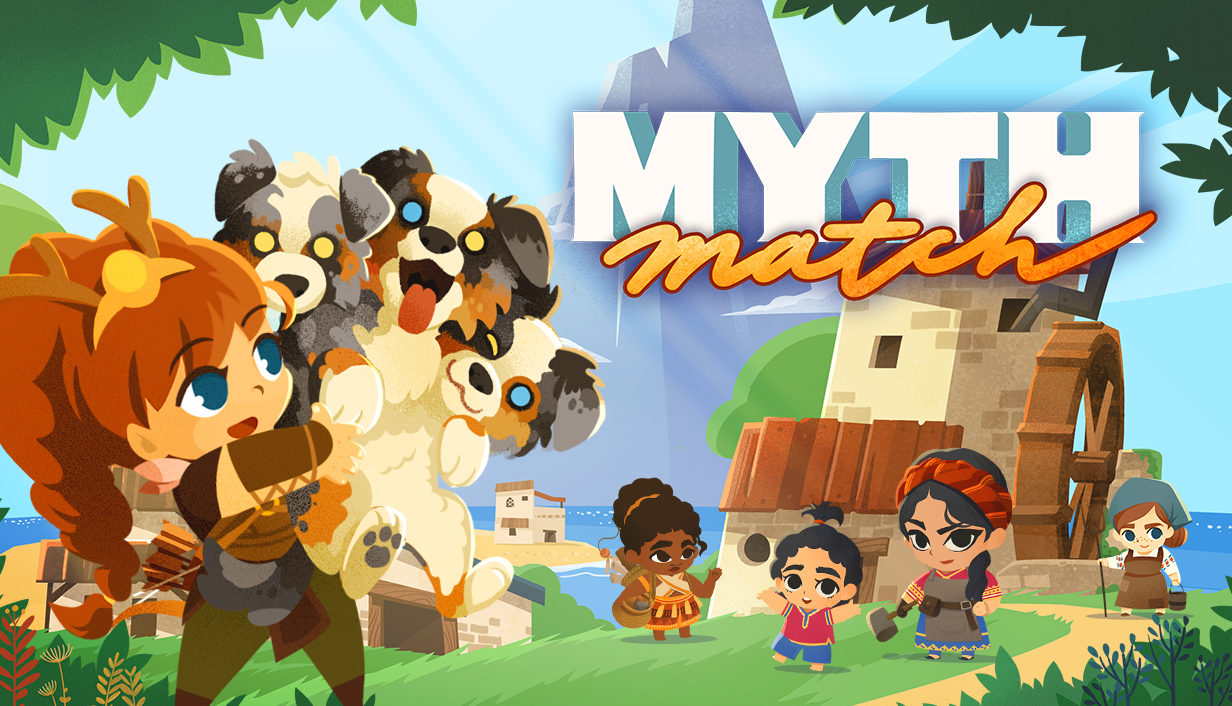
Mythmatch from Team Artichoke bills itself as an anti-capitalist tale in its Steam description, which it is, but it's not quite what I expected. This is a soft, kind tale about community and interdependence, portrayed through bright colors, and the Greek Gods at their most adorable. And as such, I adored it.
Before diving into an exploration of this particular game, I have to go backwards and explain merge games. Merge games are a genre of games mostly found in the mobile game sphere. I'm not sure if this was the first one, but Merge Dragons from Zynga is certainly the most notable. The key mechanic is placing three (or more) of the same objects together will cause it to "merge" into a new item. Then, three of those will merge into yet another new object, and so forth. It's a strangely addictive formula, especially if resource management and puzzle solving are incorporated. Unfortunately, most mobile examples fail to incorporate those elements. Zynga tends to lean heavily on pay-to-win mechanics to squeeze money out of their players at the cost of any actual depth. Mythmatch’s staunchly anti-capitist theme is fitting in this light, with the plucky underdog indie stepping onto the mobile battlefield ruled by the greedy corporation.
I always really enjoyed the mechanics of the merge games, even if they never were utilized to their fullest potential. It always felt like a missed opportunity. That changed when I stumbled upon Mythmatch and its Greek mythology trappings. And just like that opportunity became reality – an addictive loop, immersive world and fantastic writing made for an engaging 20-hour journey.
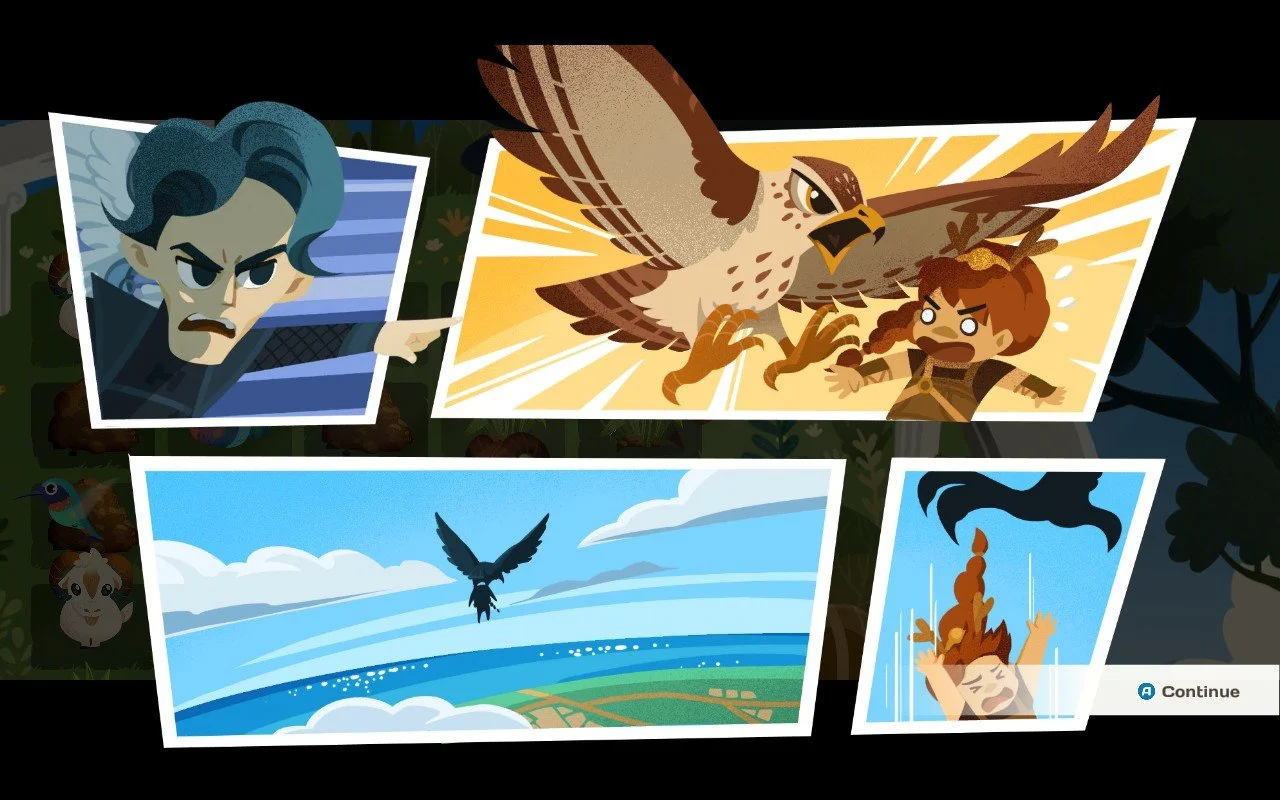
The game opens with Artemis and her twin brother Apollo hanging out on an island in the middle of nowhere with the centaur Charon. Artemis wishes to meet her father Zeus, and ascend to godhood as her birthright allows. Plus she even has a new power. This power is the ability to merge objects into the thing that hunts them. That's at least how the game explains it. For example, merging rats together turns them into a hawk. From there she's able to use said hawk to momentarily catch the attention of Zeus himself, who comes down to Earth. It's all in vain though, as he's far more taken with his son, and doesn't even spare Artemis so much as a glance. Apollo, it should be noted, has done nothing to deserve his father's attention compared to his sister. He seems more in the business of lounging around being waited on hand and foot by Artemis.
Zeus immediately takes the twins to Mount Olympus where Apollo is whisked away to become God of the Sun. Artemis then seeks to establish herself as Goddess of the Hunt. Unfortunately Mount Olympus has a bit of a sexism problem. A God has a plethora of roles to choose from, while a Goddess finds her options far more limited. The only one open is that for Goddess of the Moon, where she would reflect Apollo's light. Our main character rejects this, only for Hermes (who's a real slimeball) to cast her down to Ithaca. This is where the game really starts, with Artemis working with the townsfolk to get back to Mount Olympus.
From there, the story of Mythmatch is split into two parts — the time spent in Ithaca helping the citizens and building relationships, and then the time spent in the court of Mount Olympus trying to win favor with various gods and goddesses before Hermes casts her back to the human world once again.
When Artemis arrives in Ithaca she finds a city with problems. Everyone hates each other, the bridge is out, the king is long gone, and the current queen Penalope has locked herself in her palace. Thankfully Artemis is here to provide some divine intervention!
This part of the game functions a lot like an adventure game. Artemis must fetch various items for the townfolk. It’s here her aforementioned powers manifest through the merge mechanics, leading the player to create items and manage materials. As these quests are completed, Artemis grows closer to the townfolk, and the city grows and expands. As it does, new characters and mechanics are introduced.
Once the city is asleep, the goddess-to-be returns to Olympus to curry favor with the gods, and eventually cement her place among them. There are multiple gods such as Dementer, Hephaestus, and even the annoying Apollo himself. These have stages where Artemis matches objects, sometimes in a set time frame, sometimes until the board fills up, and tries to achieve the highest score. Each attempt improves our heroine's standing, though they always end with Artemis being rudely sent back.
Completing quests in the human world unlocks bonuses in the Mount Olympus stages. Making gods and goddesses like you gives improvements in the human world that makes completing requests easier. Through this interlocking relationship the game progresses, creating a very rewarding feedback loop that had me playing for hours in a single session.
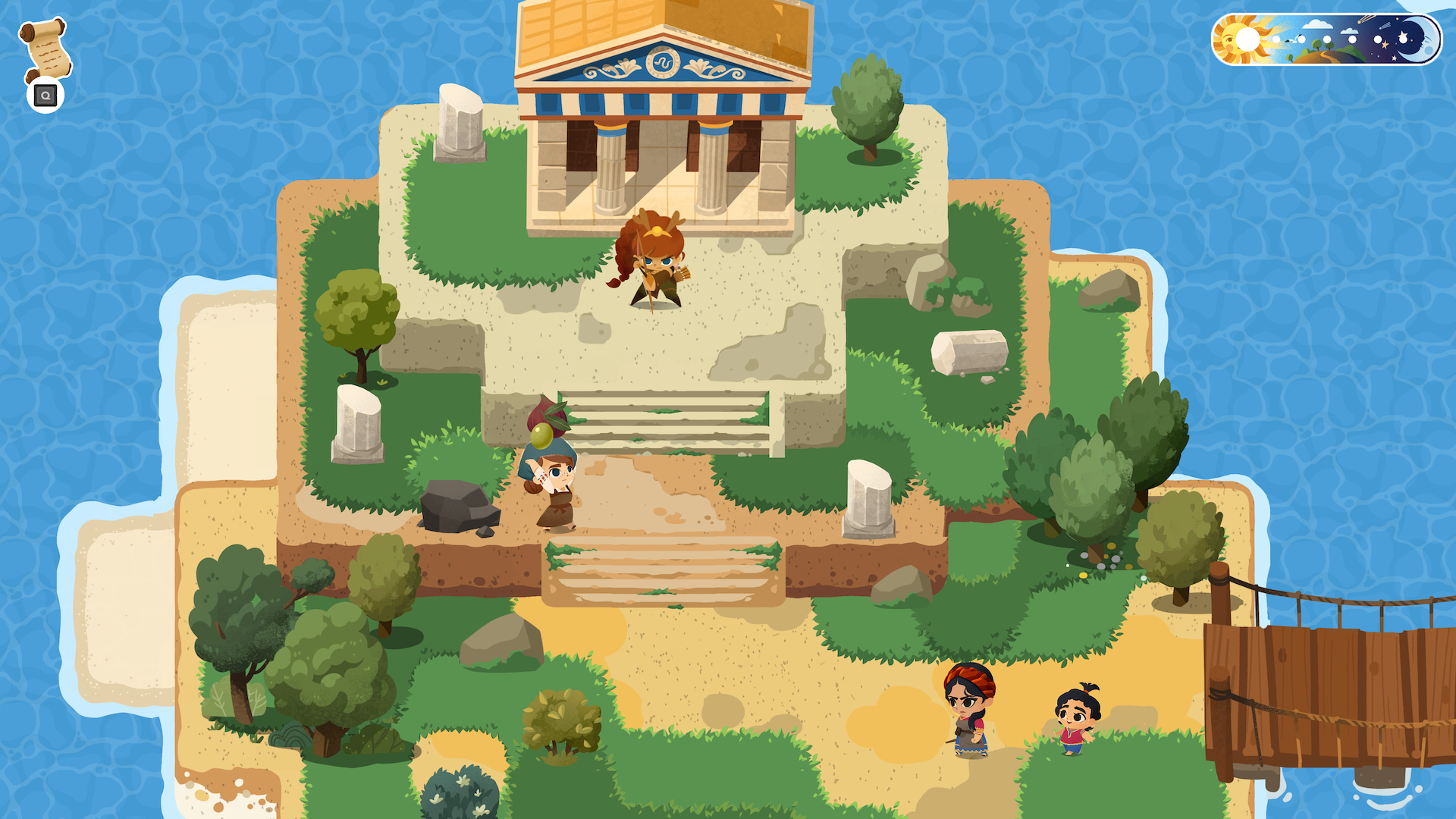
The writing is exemplary and I genuinely grew attached to the characters. I dove into stories about tough topics such as feminism, toxic masculinity, food insecurity, infertility, and even agoraphobia among many others. These topics were handled very maturely and without getting too heavy in what's a fairly lighthearted kid friendly story. Talking about all the ground Mythmatch covers would take too many words — it's all very interesting and engaging. My final note on the writing is, intentional or not, that the use of the Greek Gods, noted for their callous treating humans as playthings in mythology, are the perfect vehicle for a story about community and interdependence.
This is an amazing game that needs more attention, so why stop here? I can point out a few more things in the game's favor. The graphics are a gorgeous cartoon style that perfectly capture the cast. I played this on a Steam Deck (which has that green checkmark) and found that while the controls took a little to get used to it, it was a fantastic experience once I adjusted. The game itself is fairly low stakes, and not at all stressful. While there is a day and night cycle, there is no time limit, giving players all the time they need to work through the world. There's even a wholesome hug mechanic with unique art for each character.
Overall, I love Mythmatch. It tries, and succeeds in doing something different with its gameplay. It’s as charming as it is fun to play thanks to its variety and depth. I apologize for taking five months to review this, but will say, with The Odyssey in theaters and in the public discourse, now is just as good a time as any to check it out.
Mythmatch
Mythmatch, an anti-capitalist tale featuring merge mechanics, is a breath of fresh air in the crowded cozy genre.