Saros [Review]
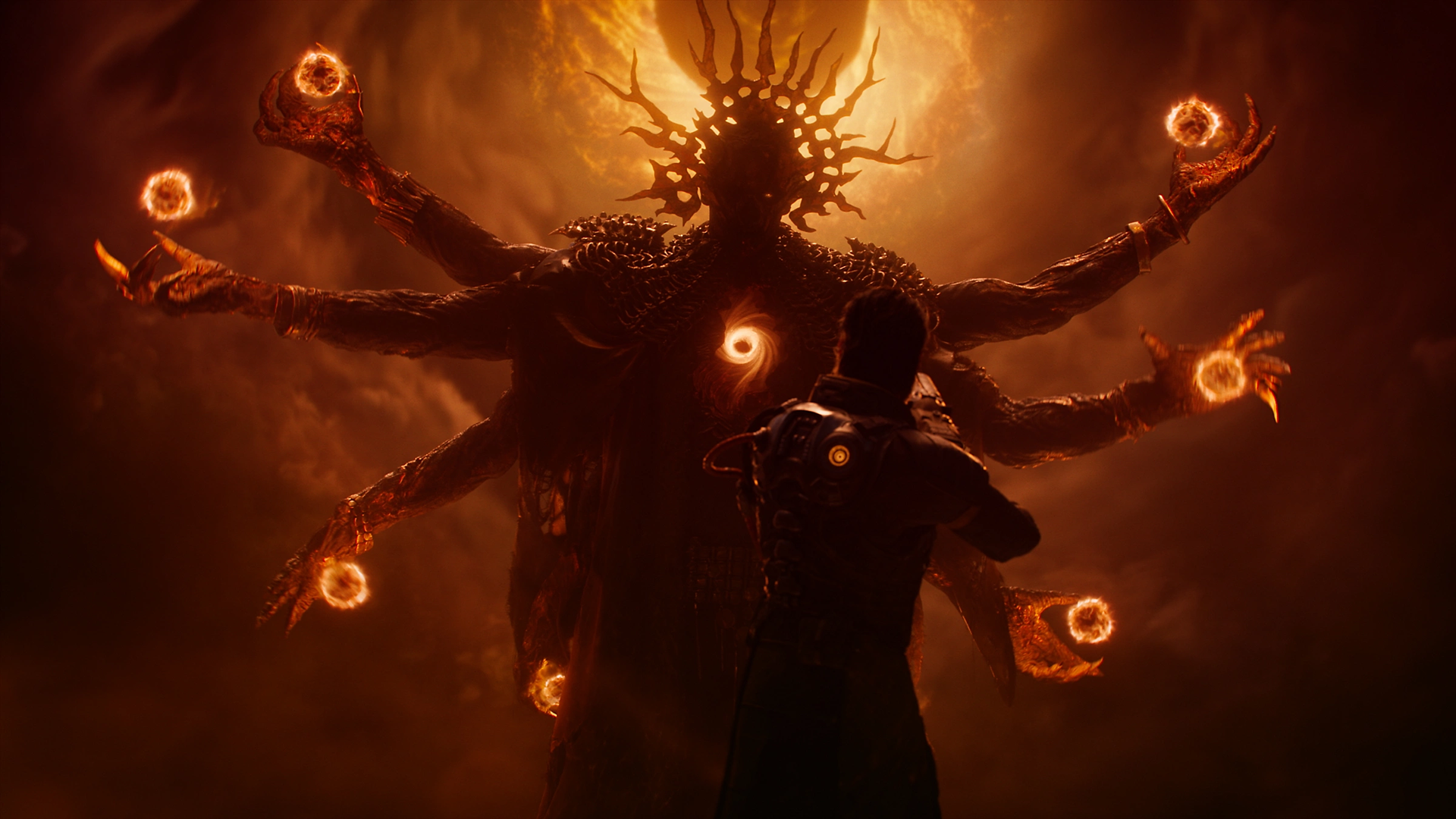
Housemarque's spiritual successor to Returnal plants its flag proudly on the haunting planet of Carcosa.
Almost exactly five years after Returnal landed on PS5 and immediately became one of the most talked-about exclusives of the generation, Housemarque is back. Saros is the studio's spiritual successor to that bullet-hell third-person shooter, and it arrives in the middle of one of the more stacked gaming years in recent memory. Resident Evil 9, Pokémon Pokopia, and Pragmata have already made strong cases for themselves in 2026, but Saros has been hovering near the top of the most-anticipated list for Sony faithful since it was first announced. After spending the better part of the last week with it, I can say with confidence that Housemarque has delivered something worthy of that anticipation. This is a fast, fun, and ferociously well-crafted adventure, and it more than earns its place in the lineage the studio has spent thirty years building.
Welcome to Carcosa
You play as Arjun Devraj, a Soltari Enforcer tasked with investigating the planet Carcosa, a lost off-world colony, ostensibly under corporate orders but also under the weight of something far more personal. Three separate echelons of colonists were dispatched to the planet to mine Lucenite, a compound with enormous energy potential, and all three went silent. Arjun is one of two remaining Enforcers aboard Echelon IV, and he arrives determined to find out what happened to Echelon I, which he has a connection to that goes well beyond the mission brief.
What makes that setup land is the performance carrying it. Rahul Kohli voices and does motion capture for Arjun, and it's what many are calling a career-defining turn. He gives the character a grounded mix of toughness and vulnerability that gets you invested early. This isn't a stoic space marine doing stoic space marine things. Arjun feels weathered, searching, and at times genuinely overwhelmed by what Carcosa does to him and the people around him. The Passage, the hub where Arjun returns between runs, is where much of the story's humanity resides. The rest of the Echelon IV crew voice their own perspectives on Carcosa and Soltari's agenda, and their collective grip on sanity loosens in genuinely fascinating ways as the game progresses. I caught myself looking forward to returning to those conversations between runs, which isn't something I expected from a roguelite shooter.
Saros is committed to a principle of characters being discovered naturally rather than through direct exposition, and it leans on logs, shifting viewpoints, and layered perspectives to let players construct a picture of who Arjun really is and what Carcosa is doing to him. It's the kind of sci-fi storytelling that rewards patience. Housemarque has always been a gameplay-first studio, but here they've made something that earns genuine emotional investment alongside its mechanical thrills.
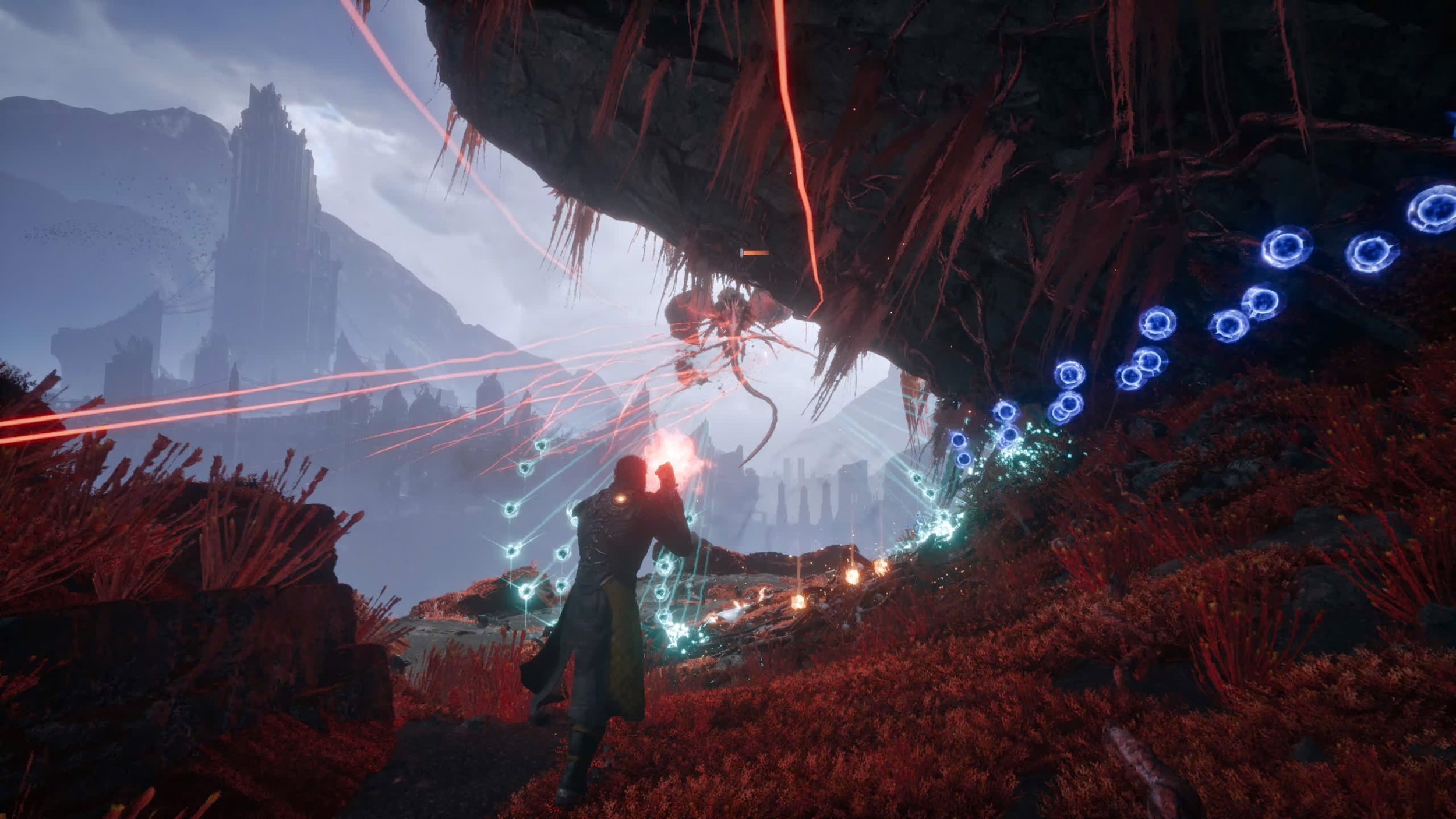
Carcosa itself functions as something close to a character. The planet has whims and moods all its own, shaped by its recurring eclipses, which meaningfully alter both the world and the life existing on and within it. The planet moves and shifts with each cycle, presenting Arjun with a fresh challenge each time he is reborn. The different biomes range from underground mechanical labyrinths to shattered alien ruins, dank swamps, and grand alien architecture. Every corner of this world feels like it has a history, and uncovering it is part of what keeps pulling you back in.
A World That Looks and Sounds Like a Nightmare (One You Don't Want to Leave)
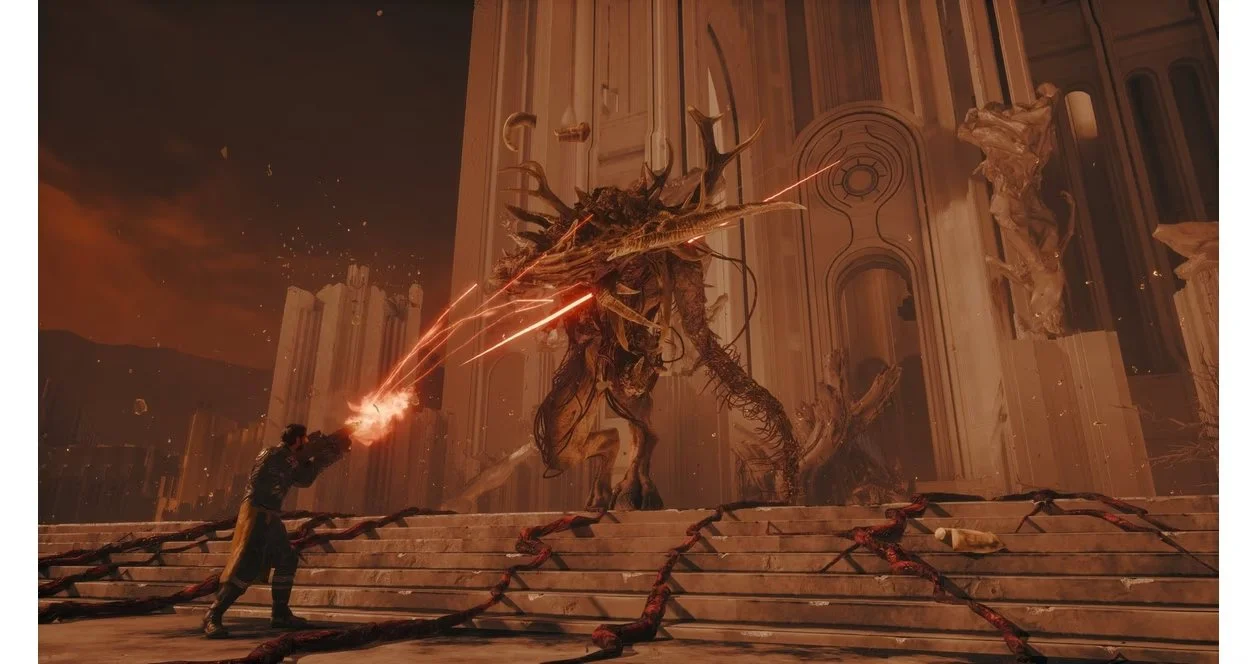
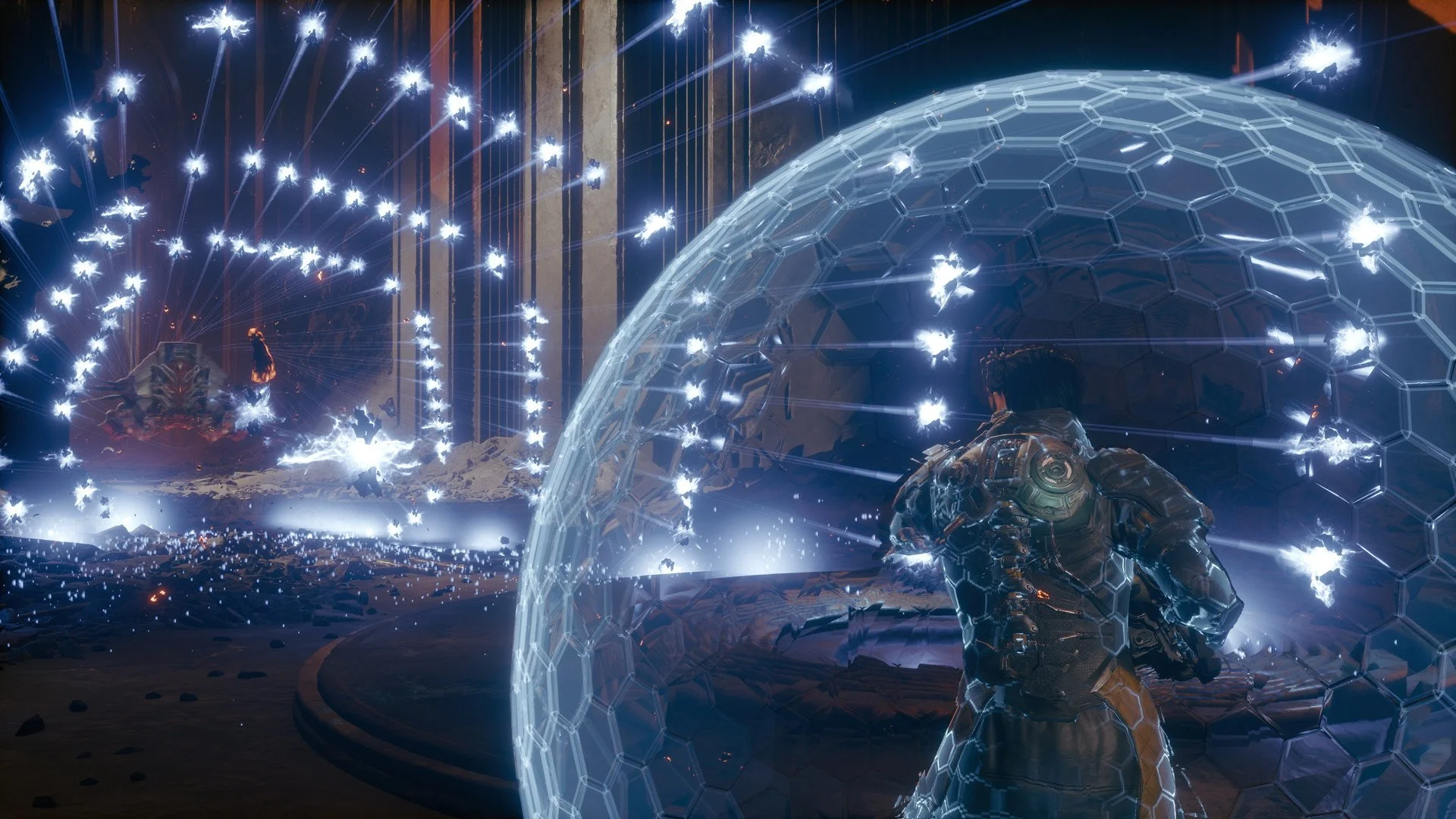
Saros is a gorgeous game. Built from the ground up for PS5 and taking full advantage of Unreal Engine 5, the visuals deliver high-resolution imagery packed with particle effects alongside DualSense haptics that distinguish both weapons and environmental feedback. The biomes are varied enough that each one carries its own visual identity, and the creature design throughout Carcosa is the kind of thing that makes you stop mid-run to really look at something before it tries to kill you. Housemarque has a gift for making danger beautiful, and Saros makes that case more confidently than anything the studio has produced before.
The audio might be the most impressive piece of the package. Atmospheric 3D soundscapes combined with Sam Slater's dark electronic and drone-metal score constantly reinforce the tension and mystery surrounding Carcosa. The soundtrack features a wide range of tracks from haunting to driving, all of which fit their scenes well. Slater, a two-time Grammy Award winner, has put together a score that feels like a part of the world rather than a reaction to it. The shift from moody, exploratory ambient tones to heart-pounding combat music the moment enemies appear is immediate and visceral. That contrast is handled so well that after dozens of hours, the sudden transition still puts you in high-alert mode. One review described it aptly: lush but moody ambient scores, drone metal with wailing electric guitars alongside tight, thumping drums, and comforting hymns of sirens weaved through heavy, angry beats of rage. It is music that makes Carcosa feel like something you shouldn't want to be on and can't bring yourself to leave. That tension is the game in a nutshell.
Come Back Stronger: The Combat and Progression Loop
Saros builds its moment-to-moment action on two core stats: Command, which governs your combat abilities and how you interact with the world offensively, and Drive, which shapes your mobility and dodge capacity. Threaded through both is the returning Adrenaline mechanic, familiar to anyone who played Returnal, which rewards consecutive kills without taking damage by unlocking escalating bonus tiers that can dramatically shift the feel of a run when you get them humming.
The roguelite backbone this time is more generous than anything in Returnal, and that is mostly a good thing. The Lucenite and Halcyon you collect during runs are retained and used to permanently upgrade Arjun through the armor matrix at the Passage. The upgrade tree covers armor integrity, Power Weapon capacity, artefact slots, health drop frequency, and more. It doesn’t take long to see the design philosophy behind the tagline “come back stronger”: every death leaves you more capable than you were before. After clearing the second biome, the Carcosan Modifier system opens up, letting you layer buffs onto your run in exchange for corresponding detriments, introducing a risk-reward dimension that gives more experienced players room to tune their challenge upward.
These systems compound well, and the quality-of-life addition of being able to jump to key biomes keeps the narrative moving at a pace that Returnal rarely achieved. That said, I'll be honest: as the upgrades stacked up and the modifier system came online, I found the overall difficulty curve softened more than I wanted. The action never stopped being frenetic or satisfying. But some of the edge that made Returnal feel genuinely threatening in its best moments was harder to locate here. Boss encounters that should have pushed back a bit more tended to fold a run or two ahead of schedule. For players who bounced off Returnal's notorious difficulty, this is a genuine selling point. For those who fed on it, you may find yourself reaching for the harder modifier combinations sooner than expected.
Where the game never loses a step is in the gunplay itself. The adaptive trigger implementation here is among the best on PS5. Every weapon has an alt-fire version tied to a half-press of the L2, and the resistance variation between alt-fire and your Power Weapon on a full press is tactile and addictive in a way that makes every firefight feel alive. The weapon variety runs from tactical rifles and hand-cannons to firearms that send buzzsaw blades screaming across the battlefield, and the game does a good job of keeping your arsenal feeling novel through a run. Enemy projectiles arrive in a range of colors that dictate how you engage with them: blue projectiles can be absorbed with your shield to charge your Power Weapon, red ones can be parried to stun enemies, and the eclipse-triggered yellow projectiles are particularly dangerous, corrupting your maximum health with each hit. That color-coded threat system introduces real depth to combat encounters that might otherwise feel purely mechanical. Reading a bullet pattern and responding correctly feels great every single time.
A World Worth Dying For
What Saros ultimately delivers is immersion. The mysteries surrounding Carcosa, from the fates of the previous Echelon expeditions to the haunting logic behind the planet's eclipses, are layered and genuinely compelling. They give each run a sense of forward momentum that goes beyond simply trying to clear the next biome. You die, you return, you pick up a new log or exchange a few words with a crewmate whose grip on reality has loosened another notch, and Carcosa feels a little more real and a little more dangerous than it did before.
With Saros, Housemarque has successfully iterated on the model Returnal established, deepening the roguelite mechanics while broadening the narrative scope and making the whole package more accessible without gutting what makes their games distinct. It is a confident, polished, and deeply satisfying PS5 exclusive that deserves to be played. Whether the studio runs this play back for a third time or, like Carcosa itself, shifts on us completely and tries something we're not expecting, I'll be there on day one. But for now, Carcosa is calling. You should answer.
Saros
Housemarque returns to form with Saros, a frenetic and beautifully realized spiritual successor to Returnal that proves the studio remains PlayStation's most underrated secret weapon.