Mega Man X #2 [Review]
Arseneault and Steinbach continue to demonstrate their understanding of the source material in this faithful comic adaptation
I was nine or ten years old when Mega Man X first showed up in my life, and I remember the weight of it immediately feeling different from the original series. X had something from the jump that the classic Mega Man would take years to develop: doubt. That tension between power and conscience was baked into the game's DNA, and for years it lived largely in subtext, in brief cutscenes and Dr. Light's holographic pep talks from glowing capsules. You had to do the emotional work yourself. Issue #2 of UDON's new Mega Man X series, written by Daniel Arseneault with art by Hanzo Steinbach, takes that latent emotional content and puts it front and center, and it mostly earns the upgrade.
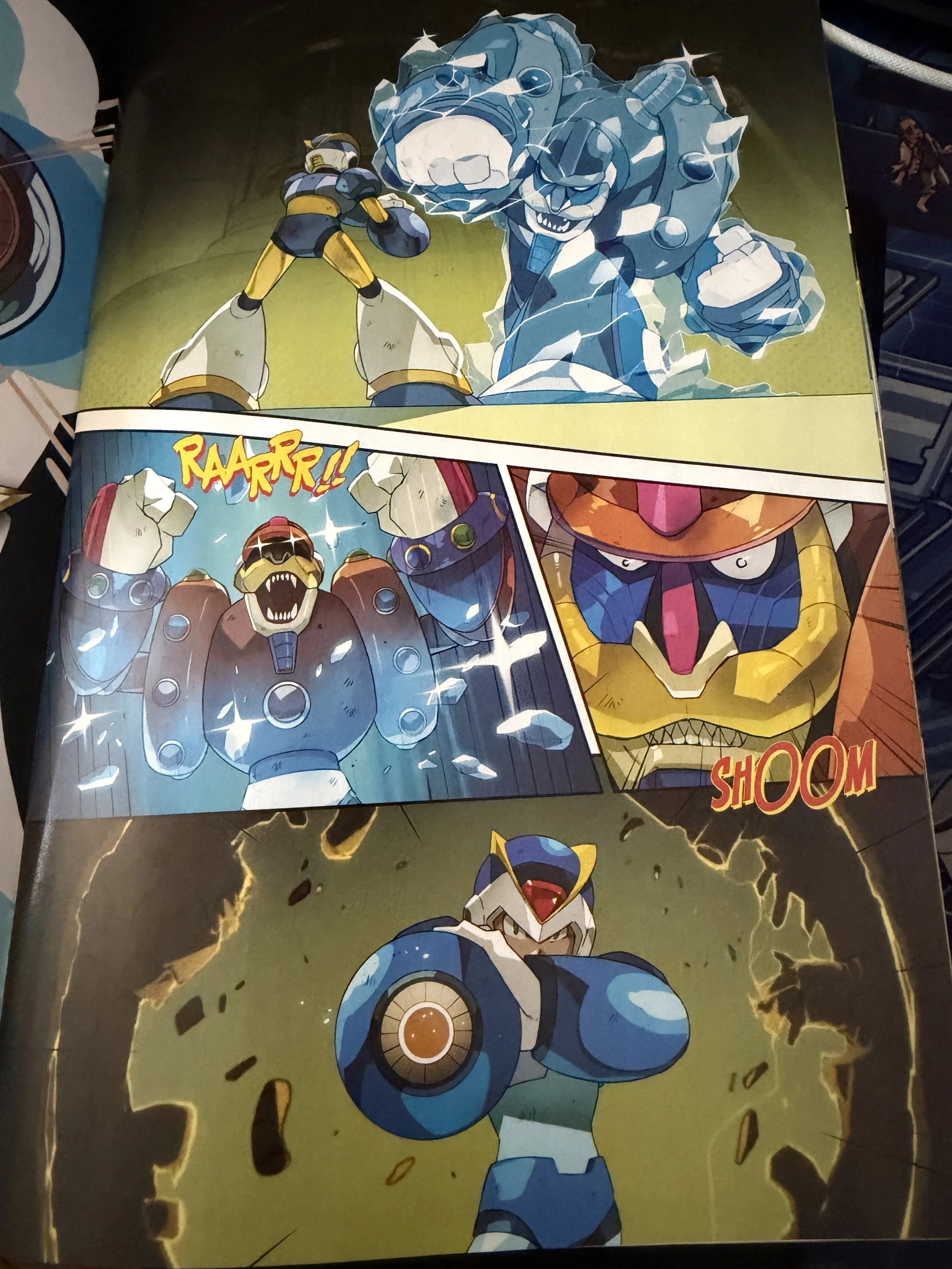
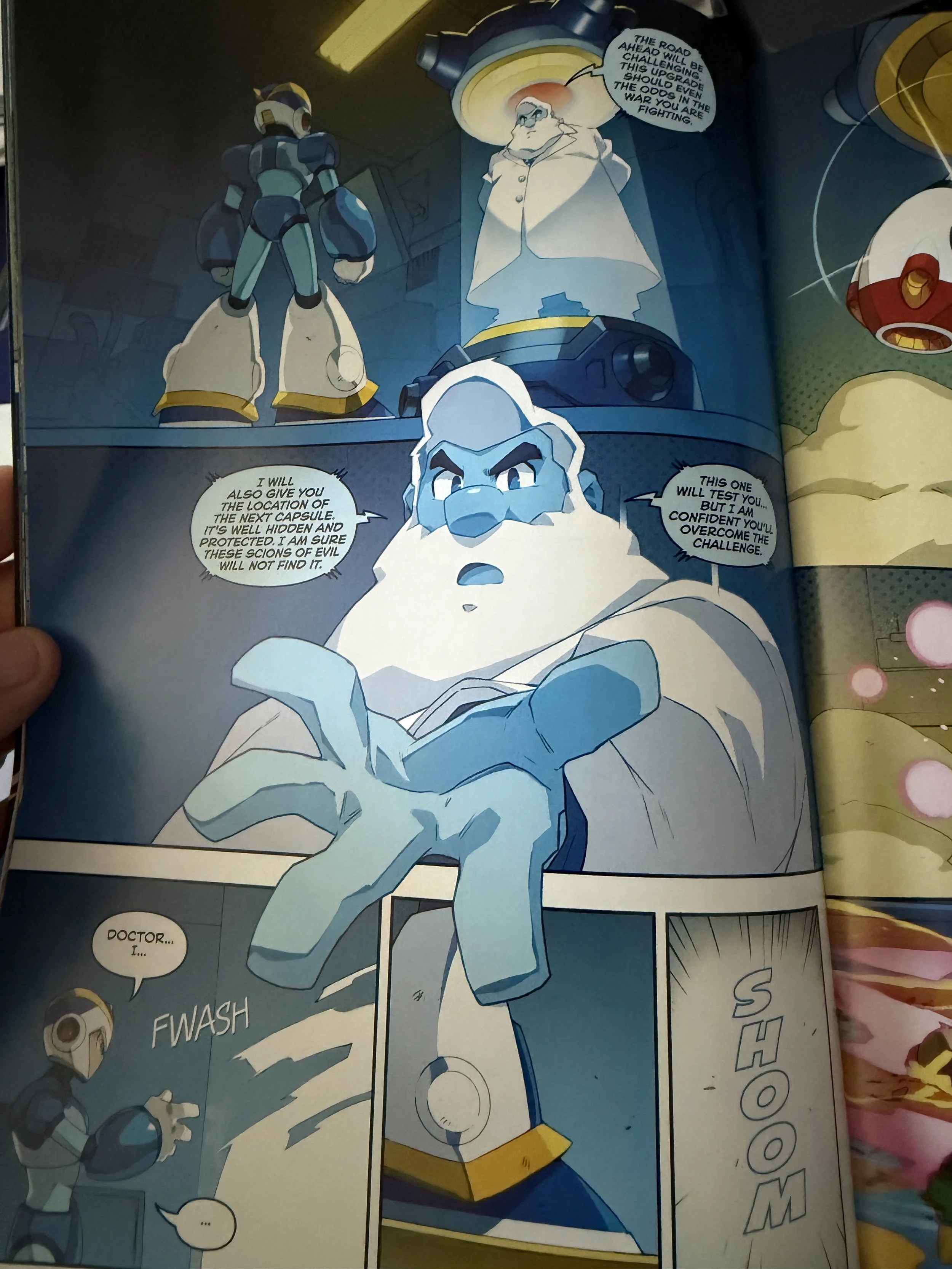
Arseneault clearly knows the source material. The issue opens with a brief but punchy dispatch of Spark Mandrill before shifting its real weight to the Flame Mammoth encounter, which gets the room it deserves. That fight is the centerpiece here, and it plays out with satisfying escalation. The structure mirrors the game's own rhythm throughout: boss encounters, a capsule upgrade sequence with Dr. Light, and the slow accumulation of dread as more Mavericks remain on the board. That final image of X standing before the monitor wall, four targets still active, lands with genuine narrative weight. Arseneault doesn't just recreate the game's beats. He adds texture to them. The brief exchanges with the support crew give the mission a human cost the SNES cartridge could only gesture toward, and the Dr. Light capsule scene, rendered here as a bittersweet farewell that fades mid-sentence, hits as hard as the 16-bit dialogue box did.
Steinbach's art is doing serious heavy lifting throughout. His style sits comfortably between the clean geometric look of the original Inafune character designs and something looser and more expressive. The Flame Mammoth sequence uses color brilliantly, drenching the pages in warm golds and deep reds that communicate heat and danger before a single word is read. When X turns Chill Penguin's own ability against Flame Mammoth, Steinbach makes the temperature shift feel genuinely dramatic, the visual contrast between those color palettes doing the kind of storytelling that comics do better than almost any other medium. The action panels are kinetic without becoming cluttered, and the sound design integrated into the art feels purposeful rather than decorative.
If there's a criticism, it's that the quieter moments occasionally get crowded out before they fully register. The emotional beats are present and they're good, but the pacing sometimes rushes toward the next action sequence a panel or two too soon.
Still, as a longtime fan who spent countless hours hunting upgrades and wondering what X was actually thinking behind that visor, this comic feels like the adaptation the character has always deserved. Two issues in, I'm genuinely invested in where Arseneault and Steinbach are taking this.
Mega Man X #2
As X's journey through rogue mavericks continues, Arseneault and Steinbach prove that this story fits beautifully in comic format.