Takashi Yamazaki’s R-rated follow-up brings the Golden Tyrant to postwar Japan in a stunning, ear-splitting spectacle, even if the human story doesn’t hit quite as hard this time.
If you've been following the site, you probably already know where I land on Godzilla Minus One. Takashi Yamazaki's 2023 film remains one of my favorite theatrical experiences in recent memory, and I backed that up the old-fashioned way by going back to the theater again and again. Seven times, all told: five in color and twice in the black-and-white Minus Color cut. A Godzilla movie walking away with an Oscar for Best Visual Effects felt like the whole kaiju community getting a win, and I was happy to keep buying tickets to celebrate it.
So when Toho and GKIDS lined up Godzilla Minus Zero, with Yamazaki back as writer, director and VFX lead, the first Japanese production filmed for IMAX, and the first Godzilla film ever to earn an R rating from the MPA, my expectations were pretty high. Perhaps a bit too high, as it turns out. Minus Zero is a big, beautiful, brutal follow-up that I had a great time with, but it's also a film that made me miss a few things about its predecessor I didn't realize I'd taken for granted.
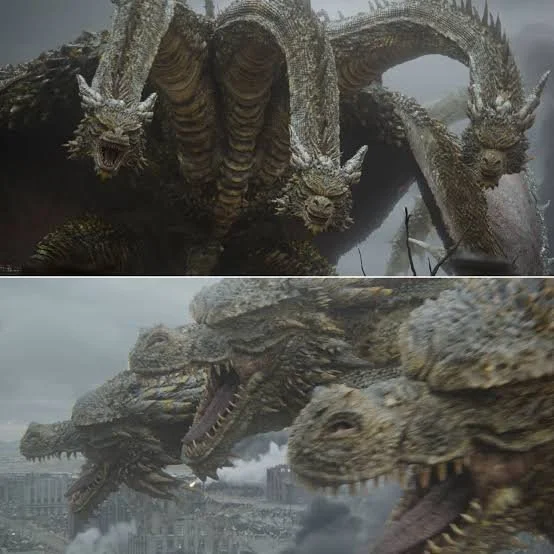
Minus Zero picks up roughly two years after Minus One left off, in 1949. The threat of Godzilla remains dispelled thanks to Shikishima's expert piloting and the bold Wadatsumi plan cooked up by Noda, and Japan is slowly piecing daily life back together. That peace doesn't last long. The film opens with Professor Kanji Murakami (Min Tanaka), a colleague of Noda's, barely escaping with his life as he captures footage and data on a new threat from outer space. Its name is Ghidorah, and it is leveling cities. Shaken but alive, Murakami makes an offhand comment that he has "survived yet again," which most of us in the audience will read as a nod to a close call during Godzilla's rampage in the last film.
Noda (Hidetaka Yoshioka), now heading up the Disaster Response Bureau, is joined in the effort by Makoto Aoyama (Masami Nagasawa), a weather forecasting savant whose knack for predicting atmospheric patterns turns out to line up remarkably well with predicting where Ghidorah is going to strike next. Together they work to outmaneuver the Golden Tyrant and concoct a scheme to put down yet another destructive kaiju.
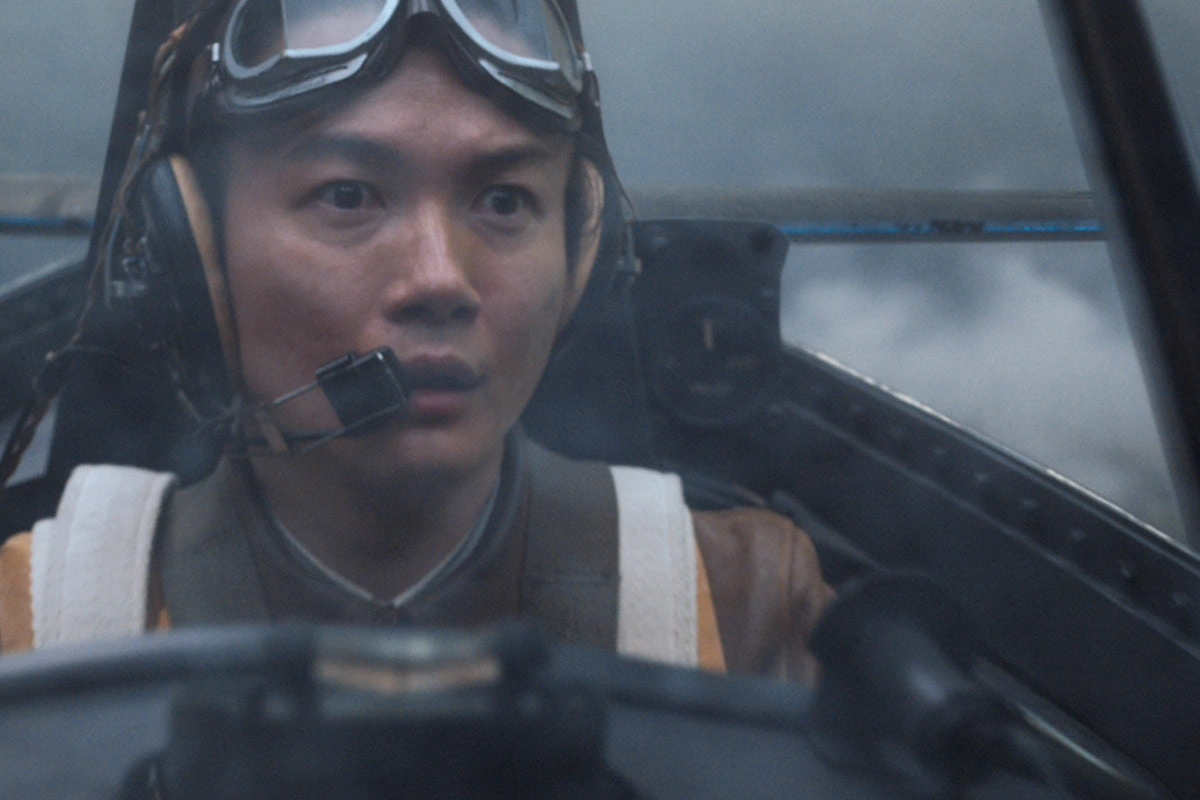
Meanwhile, Shikishima (Ryunosuke Kamiki) has built the quiet life he never thought he deserved with his wife Noriko (Minami Hamabe) and their adopted daughter Akiko. Noriko is still battling the infection of Godzilla's living cells embedded in her neck and shoulder, and Shikishima spends much of the film weighing the cost of inaction against whether it's worth disrupting the fragile peace his family has found. Running alongside all of this is a subplot involving American officers and soldiers attempting to seize Murakami's research for themselves, which I'll have more to say about shortly.
Spoilers for the back half of the film follow.
Murakami's "survived yet again" comment does refer to Godzilla, but we later learn it goes much deeper than that. He was vacationing with his family in Hiroshima and happened to be out the morning of the atomic bombing. He returned to find hundreds of horribly wounded, half-dead citizens wandering the scorched streets, and his family burned to death in their home. It's the emotional bedrock of the character and one of the most harrowing stretches of film this franchise has ever put on screen.
Noriko, for her part, comes to realize that the curse of Godzilla's cells inside her may be humanity's best chance at survival, and she begins contemplating a journey of sacrifice that mirrors Shikishima's fateful closing flight in Minus One. And yes, the Big G himself is revived, setting up an eventual blow-for-blow deathmatch between Godzilla and Ghidorah that I won't spoil the outcome of here.
The R rating has been the talk of the film since the MPA handed it down for "some violent content/bloody images," and Yamazaki has been clear that it wasn't something he was willing to trade away. Speaking with Variety at the film's New York Film Festival premiere, he said, "There were certain scenes that, for me as a director, were so essential to the film. Censoring it or cutting it was just not an option for me."
Having seen it, I understand why. Central to that choice are the lingering horrors that the survivors of World War II in Japan are still carrying, and the Hiroshima sequences are where Yamazaki puts that front and center. The intensity of the violence and despair in those scenes is something a PG-13 movie would never abide, and it's a stark reminder that the horrors of a war only recently concluded will keep rearing their ugly head for the people who lived through it. Godzilla was born as a metaphor for nuclear devastation back in 1954, and Minus Zero confronts the real thing head on. It isn't easy to watch, and it isn't supposed to be.
Visually, Minus Zero matches and even exceeds the stunning level of detail that Minus One wowed kaiju fans with. Ghidorah's transformation and gravity-themed powers are a treat to watch unfold, and when the revived Godzilla and the Golden Tyrant finally lock up, it's a rock-em sock-em kaiju brawl of the highest order. If you can catch this one in IMAX, do it. This is a film that deserves the biggest screen possible.
A word of warning, though: it is also extremely loud. It's possible our theater was running a bit hot, but from Ghidorah's screeches in the opening scenes to the screams and pandemonium of civilians fleeing imminent danger, I found myself covering my ears and wishing I'd brought my AirPods along to dull the noise. Of course you expect some big kaiju noise to go with a big kaiju film, but go in knowing you may come out with your ears a little worse for wear.
The cast of Minus One largely returns for Minus Zero, minus the brooding, war-weary Tachibana. Honestly, I felt his absence. He was a great grounding force for Shikishima in the first film, and nobody quite fills that role this time around. Much of the human drama instead loops back to Noda and his remorse over the experimentation he took part in during the war, and so there's less of the charm that the core group, including Captain Akitsu and young Mizushima, brought to the previous film.
Hidetaka Yoshioka does great work once again as the remorseful scientist, and his efforts to be a good mentor to Aoyama give the film some of its warmest moments. Masami Nagasawa's performance as Aoyama is worthwhile, but her arc ultimately falls a bit short of where it seems to be heading. Ryunosuke Kamiki's Shikishima is non-committal this time, bordering on frustratingly so, which makes sense for a man trying to protect the peace he's found but doesn't always make for compelling viewing. Minami Hamabe gets the meatier material as Noriko wrestles with what the cells in her body might mean for everyone else, and she carries it well.
Overall, everyone brings the same level of commitment to their roles that they did last time, but there's less dynamism in the interpersonal scenes. The human story isn't quite as fully developed, and the characters aren't quite as endearing.
Shikishima and Noriko are both war orphans in their own regard, and the found family the two of them built around little Akiko was one of the most heartwarming pillars of Minus One. A failed kamikaze pilot and a young woman who lost everything in the firebombing taking in a baby that wasn't theirs gave that film so much of its emotional weight, and it's a big part of why that ending landed the way it did.
This time around, Akiko's life is thrown into turmoil as both of her parents find themselves with their own role to play in the battle against Ghidorah and Godzilla. Yamazaki is clearly reaching for something here. The years following World War II left a staggering number of orphaned and abandoned children across Japan, and watching Akiko face the possibility of losing the only family she's ever known puts a small, human face on that history.
The execution is where it gets tricky. Akiko's drama toes a fine line between heartbreaking and annoying, and the same scenes that will wreck some viewers are going to wear on others. It's hard to say which side of that line you'll fall on, and I suspect it'll depend a lot on how much patience you have for a frightened (and often screaming) kid in a movie that's already asking plenty of your nerves.
And then there's the subplot with the American officers and soldiers trying to get their hands on Murakami's research. I have to be blunt here: the performances are painfully bad. Stiff line readings, cartoonish menace, and a general sense that these folks wandered in from a much cheaper movie.
I do think this was likely a conscious choice on some level. These are the post-war occupation years, and there's understandably still a lot of anger, some of it subconscious, directed at Americans for the pain and suffering Japanese civilians endured, particularly in the closing months of the conflict. Placing these characters in a film that also depicts the aftermath of Hiroshima makes the intent pretty clear, and portraying the occupying forces as blunt, graceless intruders fits the perspective the film is telling its story from. Still, understanding the reasoning doesn't make the scenes any easier to sit through. They're so clunky it's hard to overlook, and every cut back to that subplot pulled me out of an otherwise immersive film.
Godzilla Minus Zero cements Yamazaki's vision for the franchise, and I certainly wouldn't complain if we got another decade or two of Godzilla films like this one. The effects are staggering, the kaiju action is some of the best the series has ever delivered, and the R rating is put to purposeful, devastating use in a way that honors where Godzilla came from.
However, the strength of the human narrative that helped Minus One stand out falters a bit here, and that will inevitably leave some fans of the first entry a little disappointed. If you loved Minus One, go see this on the biggest, loudest screen you can find (maybe bring some earplugs), just temper your expectations for the character drama. If you're here for the monsters, you're in for a heck of a ride. Either way, keep in mind this one earns its R, so think twice before bringing along the younger kaiju fan in your life.
Godzilla Minus Zero
Godzilla Minus Zero is a gorgeous, brutal kaiju epic that puts its historic R rating to devastating use, but a thinner human drama and some painfully stiff American performances keep it just shy of Minus One’s heights.